Just four short days after adding eight new frames in the second brood box I am happy to report the bees appear to be keeping busy. They have almost drawn out the new eight frames. Our mentor thinks it will take about two to three weeks for the second brood box to be established and then…maybe…we’ll get to add our first honey super! How exciting would that be?!?!?!?
I was able to capture a few pictures and a video today. I’m anxious to see if our queen bee will be able to upload this video by herself without the help of our techy drone bee…she’s been doing very well maintaining the blog (you know, since she wants nothing to do with being near bees…but to be fair, she doesn’t have a bee suit…maybe she’ll want one as a birthday gift this year?!?!?)
The wings on this worker bee were moving at a very rapid speed (although now that I look at it in this video they don’t look to be moving as fast as I thought they were). With the warmer temperatures we might begin to see what is called “fanning”. The brood nest needs to be kept at about 93-94 degrees Fahrenheit and bees will fan to cool the hive. I’ve read that bees can flap their wings 200-230 times per second. Is that true??? Seems so fast.
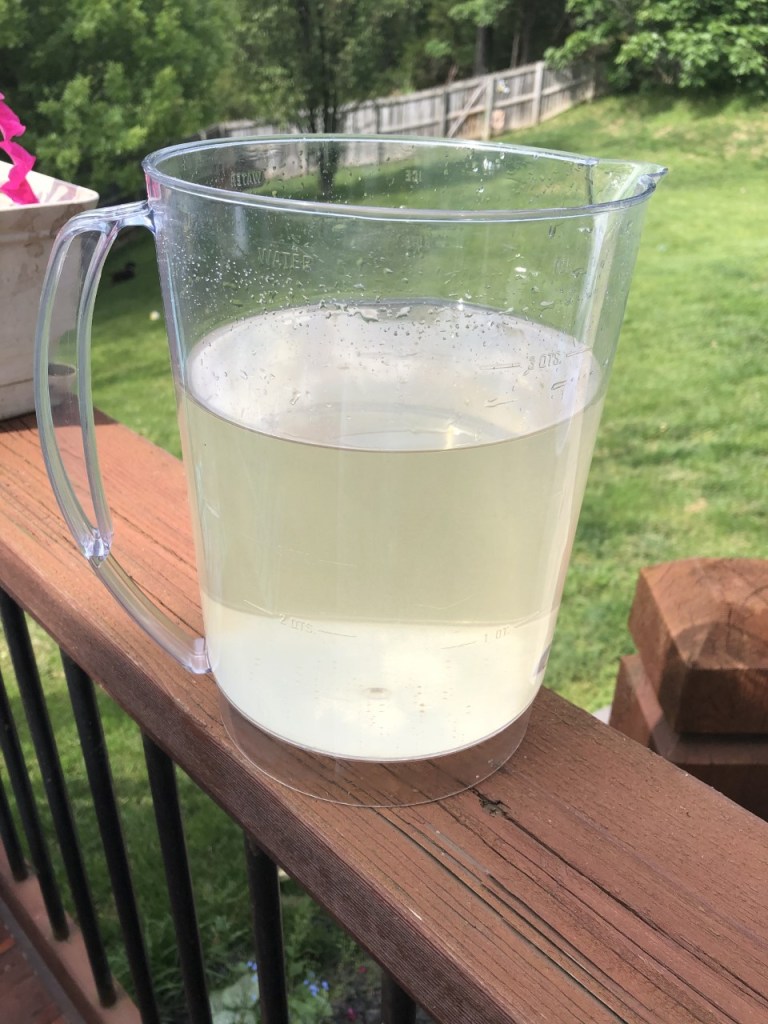
I am sad to admit that today when we went out to refill feeders the feeder in hive one was empty. I knew it would be low but hated to find it empty. First time that has happened. The bees in that hive seemed buzzier – maybe they were upset with the lack of sugar flow. Note taken. Hopefully we can keep that from happening again. Mixing sugar water in the 1:1 ratio is not rocket science but it’s sometimes tedious. I need to remember: eight pounds of sugar to one gallon of water…but I usually buy sugar in a ten pound bag so you can see where the measuring cup still haunts me. I think I just need a larger pitcher or better system in place. When I work out the kinks I’ll be sure to fill you in. For now, this is the largest pitcher I have and what I have been mixing in (it’s only partially full here because we were just topping off one of our feeders)
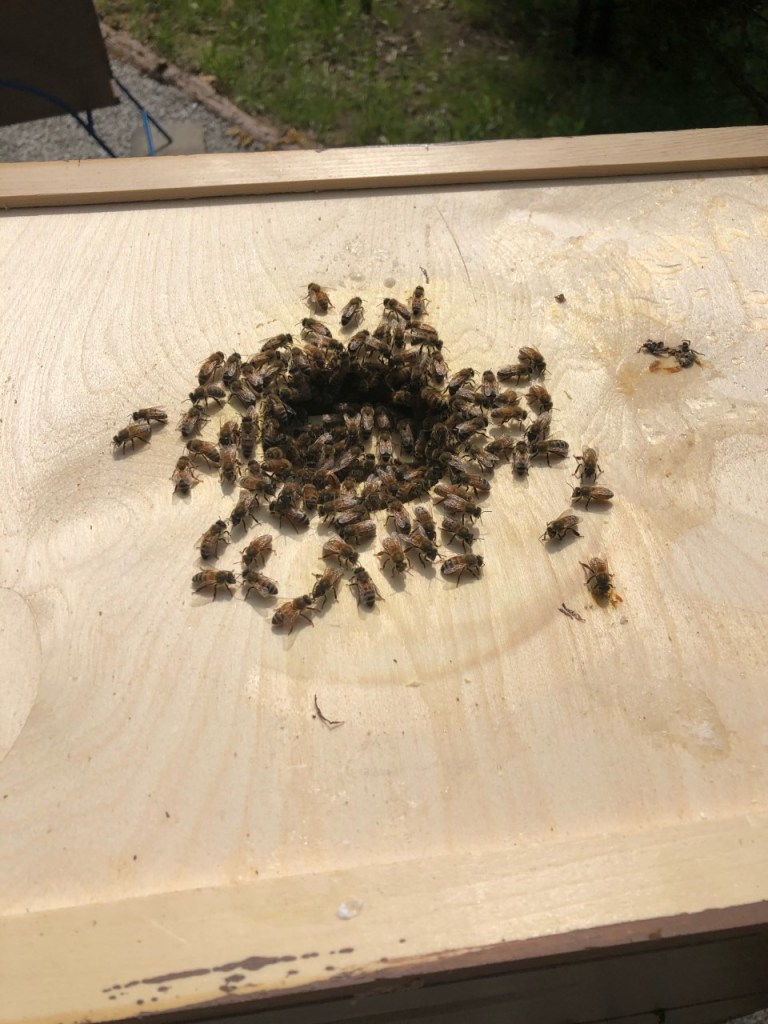
When feeding bees, you first have to remove the outer cover or lid to the hive. Beneath that sits the bucket feeder upside down. It’s just a gallon pail with tiny holes in the top. Usually the top has bees all over it but I had already brushed them away for this picture.

Sometimes mold will grow inside, I’ve been trying to wipe that away. Once the pails are refilled you have to place them back over the hole in the inner cover. This is sometimes hard to do without smashing bees. I’ve found a little patience and a small puff of smoke will drive the bees back down so the feeder can then be placed back over the hole.
This turned out to be longer than I had anticipated…being brief about bees is hard!
-Worker Bee 2021
 Howards' Hives and Honey
WOW! This is actually hard work!! 😂. Kudos to you and the Little Beekeeper!
LikeLiked by 1 person