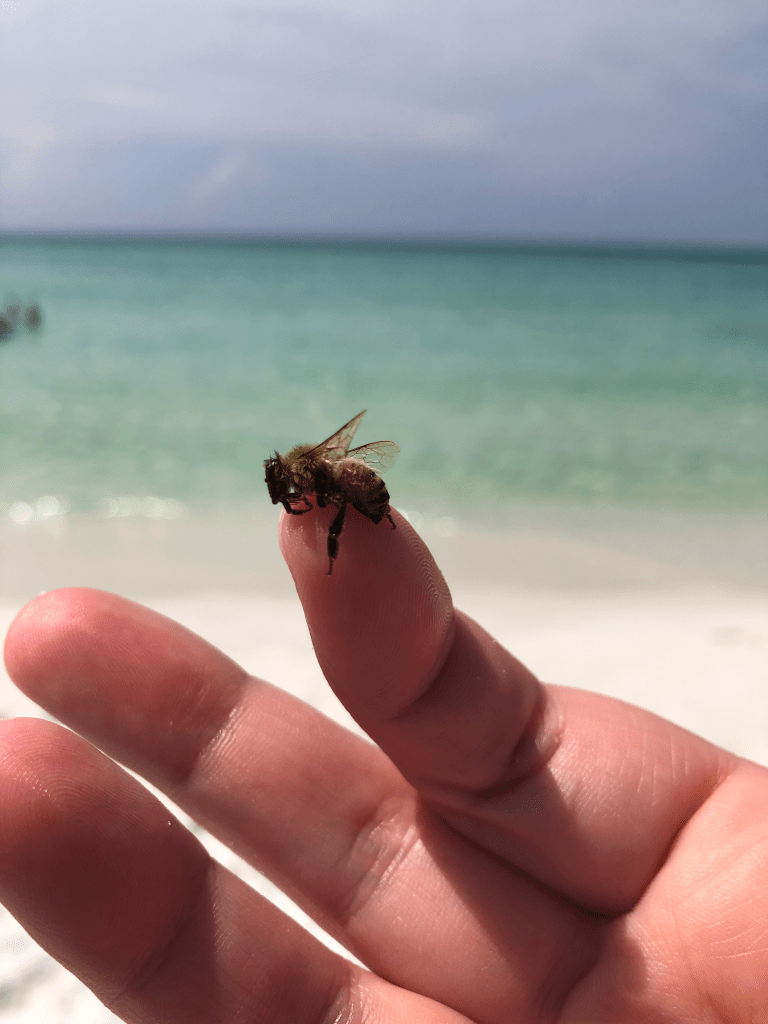
Both, our mentor and our family, had vacations planned to the beach for the last few weeks of July. And speaking of vacation, check out this vacay pic…
Of all the things you think you might see in the ocean, never did we think it would be a honey bee! Poor little bee. Before becoming beekeepers we may not have even noticed her but since we are beekeepers and our queen bee spotted her floating it warranted getting out of the water to take a pic.
Now that vacations are over, the day (August 4th) is finally here – it’s time to extract the honey. I’m nervous. My biggest fear is pests. Pests that may have ruined the honey for us. I haven’t been out to check on the bees for weeks now. In part because I wasn’t sure what I’d be looking for and I wasn’t sure what I would even do if I did find anything concerning or suspicious. I’m hoping they are fine and thriving. Regardless, I’m sure our mentor will be able to handle whatever is going on and I’m sure we’ll learn a lot today.
Remember Taxonomic Classification from Biology class? Every living organism is named scientifically and classified into seven groups…working from the largest most inclusive group (kingdom) all the way down to the most specific group (species). Or maybe you remember the saying “Kings Play Chess On Fine Green Stools”? The seven groups in the classification system are: Kingdom, Phylum, Class, Order, Family, Genus, Species. The honey bee has the scientific name of Apis mellifera because it belongs to the genus apis and the species mellifera. This was a nice inclusive summary I found on savannahbee.com
Honey Bee Taxonomy
Kingdom – Animalia (Metazoa) Honeybees are animals!
Phylum – Arthropoda These animals have exoskeletons and jointed legs. (Arthropod means “jointed leg.”)
Class – Insecta Honeybees are insects. They have jointed legs, compound eyes, antennae, exoskeletons, and three-part bodies.
Order – Hymenoptera, translating to mean “membraned wings.” This order includes bees, ants, wasps, and sawflies.
Family – Apidae, Latin meaning “bee.”
Genus – Apis, also referring to “bee.”
Species – Mellifera, relating to honey production.
According to the USGS, Thereare over 20,000 known bee species in the world, and 4,000 of them are native to the United States. Can you spot a honey bee? There are a lot of pollinators out there but we tend to keep an eye out specifically for the honey bee.
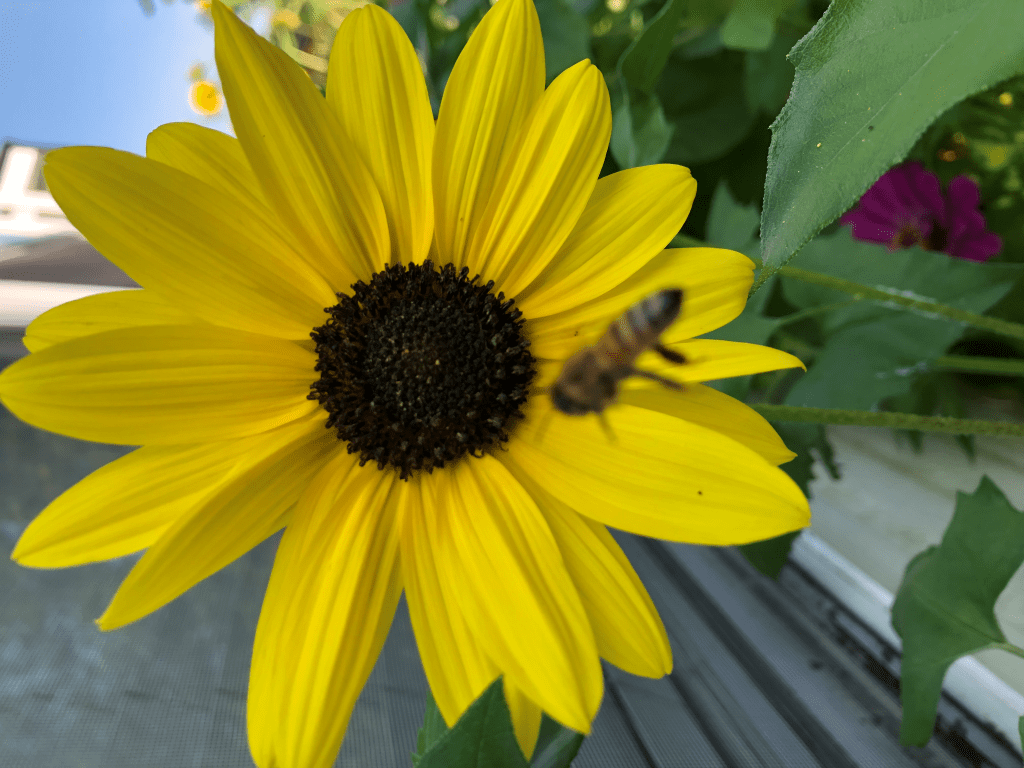
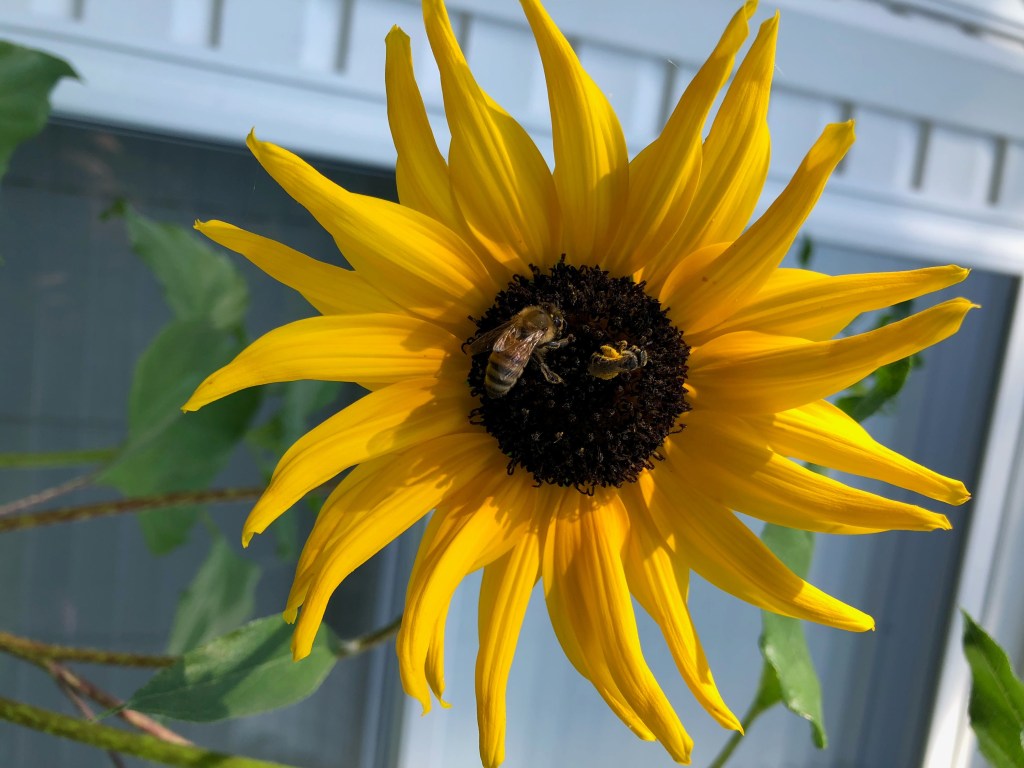
I snapped a few quick pictures this morning while watering the flowers. Let’s take a look…
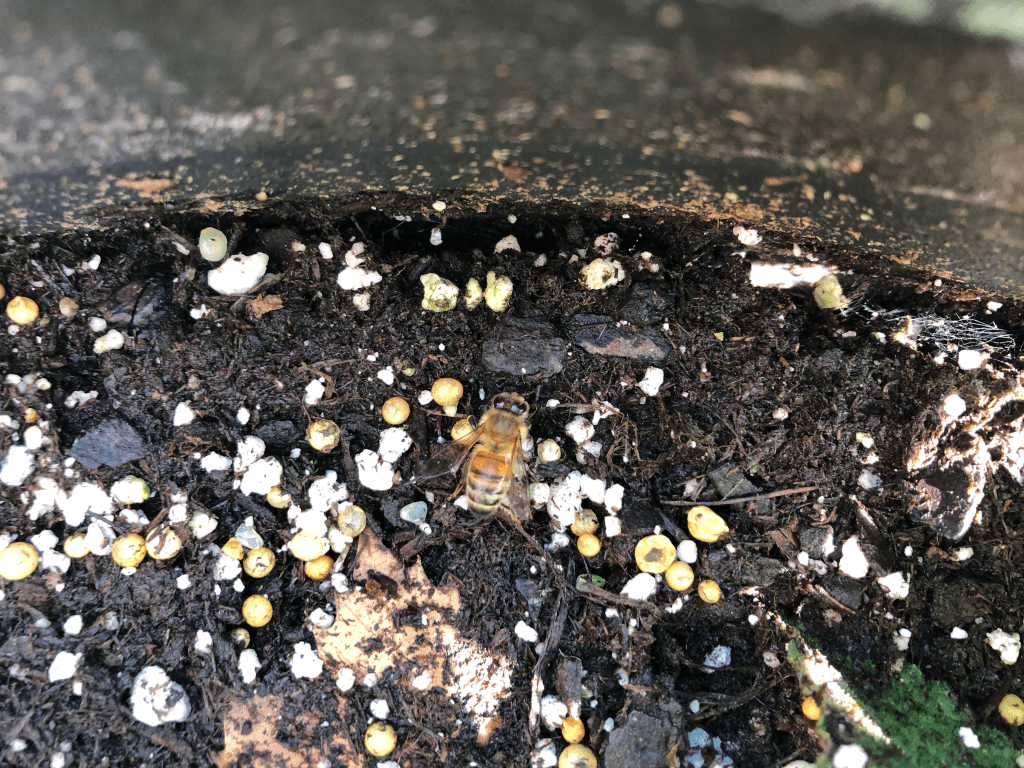
Incoming!!!! Just recently I’ve seen a few honey bees on our flowers. But we don’t see them often, I guess they have bigger and better places to work than the few flowers we have on our patio. When I do see a honey bee it’s often after I water and they seem just as interested in the water as they do any flower. See her here on the wet soil?
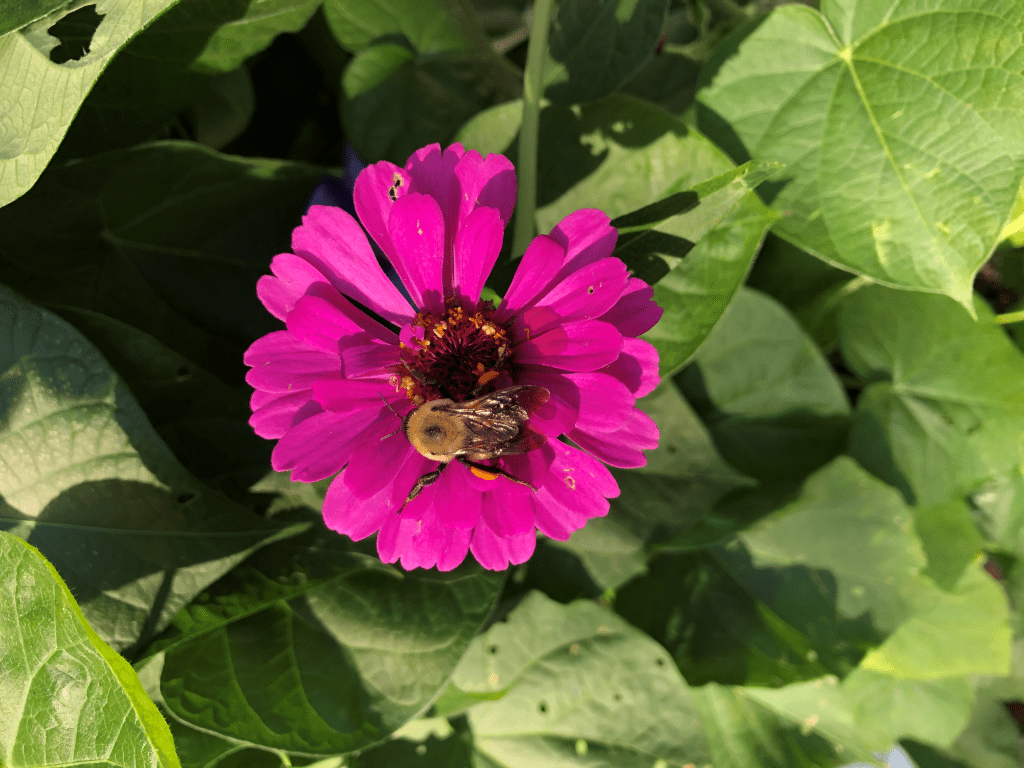
Now these guys I see a lot…
The big ol’ bumble bee. Significantly larger than the honey bee and much buzzier. I’m not such a fan of these big bees.
There’s also this one…
Kinda looks like a honey bee but it’s not. This one is significantly smaller and you can see here the comparison…
The honey bee is significantly larger than this other bee. But goodness look at those packs of pollen on the little bees back legs…bitty bee but a big worker!!!
While there might be many bees that belong to the genus Apis the specific species of mellifera is my favorite!
As for our bees they hopefully are doing well. There isn’t much management happening right now as we are simply awaiting the honey harvest. Hopefully that will take place in another few weeks. From there we’ll have some fall management to prepare for winter. What a success it would be to be able to harvest honey AND have our hives survive winter. Fingers crossed!!!
Things have been going so well with the bees since we began this journey. However, this week we got a taste of reality. I was probably overly optimistic to think I could slap a super on each hive in late June with only foundation hoping it would result in drawn out comb and honey to extract. Maybe I thought “beginners luck” would be on our side? Unfortunately when I ran out to peek at the second super that had been added about a week ago it was clear to see NOTHING had been done on those frames. Nothing. Not nearly as exciting as it was to check those first super frames a week after adding a super…all drawn out and full of nectar. Maybe the nectar flow for this year is coming to a close. The bees seem to be finished drawing out comb for honey supers this season. I’m hopeful the single honey super will provide enough honey for us this year. If our hives stay strong and survive winter maybe we’ll be lucky to get two supers on each hive next year.
Tapping the bees out of these supers to remove them was an interesting first. I’m sure my technique needs improvement but I was proud that I was able to get the few bees that were in those supers out. My mentor advised me to invert the outer cover on the ground and tap the bees into that. I attempted to do so and for the most part feel it was successful. There were a few stray bees left that I was able to brush on their way. The most nerve-wracking part was bringing what I believed to be EMPTY honey supers back into the house. I had checked and double checked for any last lingering bees and was almost sure the supers were “all clear” before entering the house. But as I sat them down on the kitchen floor would you believe I heard and saw a buzz by. Now I’m still in a full bee suit but over there on the couch is our queen bee on her computer and the buzz is headed her way! Puzzled as to HOW I missed a bee in there it soon (but not soon enough) became evident it was just a house fly. Whew.
Now, as for that BEE BIOLOGY I’ve been putting off…let’s touch on that a bit. Here is a great diagram that I snagged from the class I took at Isabees.
This breaks down the number of days a bee spends at each stage of development. This timeline can be helpful in predicting and understanding your whole hive. I still need to spend time familiarizing myself with the bee development – I’d also like to become more confident in identifying the different stages of development on the frames.
The little beekeeper and I also attended our first in person bee meeting this week. Our mentor was the speaker at the event and he is a lot of fun to listen to. It was a small gathering of people but I hope we’ll be able to get to know these other beekeepers and learn from them as well.
Great news… Isabees received the super frames and had them all assembled and ready for pick up. I hustled in to grab them and after another quick peek at the first supers, decided to go ahead and add them to the hives. I hope this wasn’t a mistake. Time will tell. I could see that honey was being capped on the outside frames on hive two and I am assuming hive one isn’t far behind that. Hopefully the bees will continue to work and draw out the second super frames as beautifully as they did the first.
I’ll touch base with my mentor in the next few days to see if he approves of this move I made on my own. Hopefully I haven’t botched anything too terribly. To be fair, I didn’t completely make the decision on my own – a few beekeepers at the bee store thought it would be ok to go ahead and add another super, but they did say to check with my mentor (I didn’t completely listen). It’s pretty exciting to think we could be harvesting honey in another month or so. I’m really hoping nothing goes terribly wrong between now and then that would but our honey harvest in jeopardy. We (mostly the bees) have put a lot of effort in this spring and summer, it would sure be nice to share some of their sweet goodness with friends and family. In the meantime, just hoping we can sail smoothly into the honey harvest.
Just twelve days ago we placed the eight frame honey supers on top of the second brood boxes and left for the lake. Today I had time to get out there and look at each of the eight frames in the supers and they are completely drawn out. Each frame has honey on it and hive two was just starting to cap a small portion of the honey. My mentor says the second honey supers go on when fifty percent of the honey in the first super is capped.
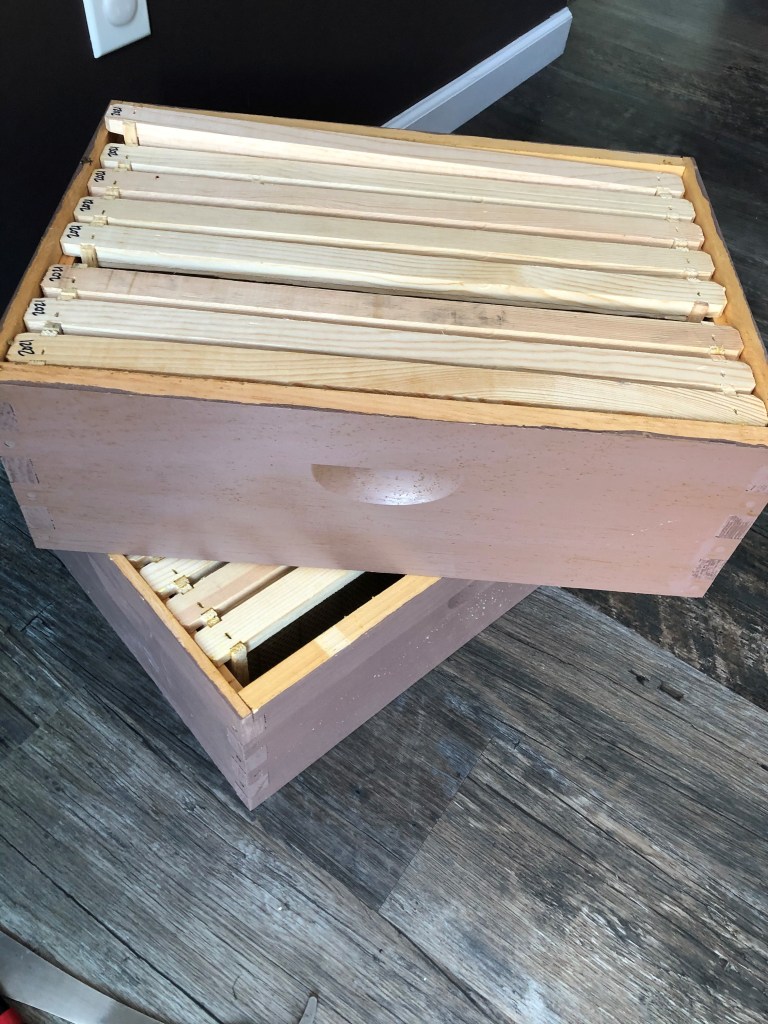
Now, if you remember, on the day prior to leaving for vacation I was rushing trying to swap out my plastic super foundation for wax foundation. I was able to secure sixteen frames for the first super boxes prior to vacation but Isabees (the only bee supply store in town) didn’t have an additional sixteen frames for the second honey supers. Not thinking, I went ahead and left all thirty-two frames with plastic foundation with her at the store thinking I’d just pick up the second sixteen wax foundation frames when they were available. Unfortunately, I didn’t consider the scenario of what if they don’t have them when I need them. I called today and they are waiting on frames – no word on when they might be available. So here I sit without super frames and foundation. None. Can’t even get the frames with plastic foundation now…completely out of everything. Not a good feeling but I’m not sure what to do. I’m anxious to hear what my mentor will suggest but I’m hoping those frames get delivered to Isabees quickly!!! Never thought I’d have bees ready to make me honey and I wouldn’t be prepared!!!! What kind of beekeeper am I?!?!?!?
In between all this frame and foundation drama I will make time for that bee biology blog soon…stay tuned!
What a month it has been. So far we’ve just been conducting hive inspections and keeping the sugar water feeders full. It hasn’t been too stressful. Keeping track of time is probably the biggest challenge and I’m glad we have a little bee journal to document what we do and when because the “I won’t forget” method doesn’t always prove reliable for us.
Planning between baseball games, birthday celebrations, vacations, and weather has been a challenge. We’ve successfully left home for vacation and returned with no known issues for our bees. They didn’t even need a sitter! Now the temperatures are rising, the rain is holding off and I’ve been told the nectar flow is on. We have removed the feeders and put the first super on both hives. Fingers crossed all goes well. These supers will hold the extra honey for harvesting. We’ll be looking to harvest the honey in the supers come late July.
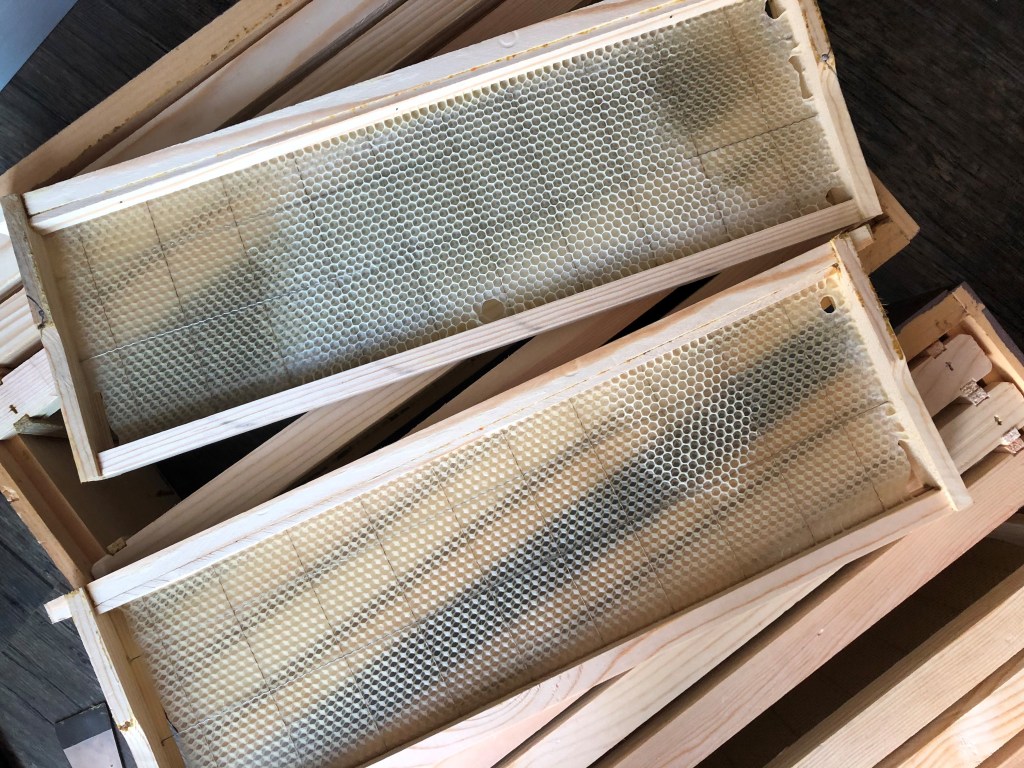
I thought we were going to use plastic foundation for the supers but my mentor (who is very knowledgeable and wonderful) wanted me to use wax foundation (just like we did in our brood boxes). It made for a scramble but the owners at Isabees were wonderful and were able to wire up the wax super foundation for me on short notice. So thankful. The beekeeping community continues to be tight and very helpful/friendly.
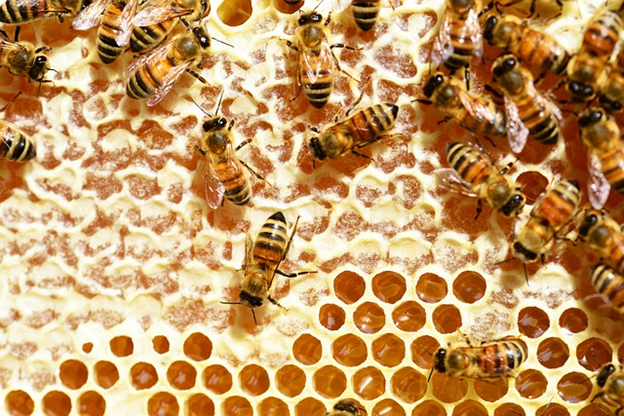
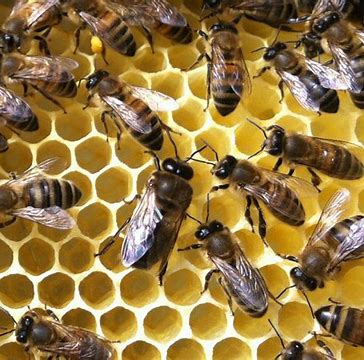
Today’s hive inspection had me observing not only larva, brood, and baby bees but also heavy frames of honey. It’s beautiful. This of course belongs to the bees but anything they continue to make in those supers we will gladly welcome. The comb construction and the color is just really neat to see first hand. This is not a picture I took but it gives you an idea of what it looks like on the frames.
The uncapped honey just glistens in the sun. So pretty. And it really is heavy. I hope we will be able to successfully extract this year so we can see and share that process.
I’ll also add…there are so many more bees since we installed the first eight frames from the nuc. I’m beginning to understand how two hives turn into thirty!!! But I cannot wrap my brain around the time it must take to manage multiple hives. I’ve also attempted to provide water for the bees. Nothing fancy, just a big bowl with a upside down plastic basket that the bees can land on so they don’t drown. I’ve placed it out in the apiary. I also have an electric water fountain on order that will hopefully help in the future but that will be closer to the house…we’ll be watching for bee visitors when that’s all set up.
My next blog should be on honey bee reproduction. It’s still something I need a better understanding of but I can see that it happens rather quickly. Our drone bee has noticed an increase in flying around the hives as well – he got intimidated the last time he mowed the lawn and steered clear instead of finishing up all the mowing near the hives. I didn’t have any great advice for him other than he’s welcomed to suit up to mow.
All in all, June 10th and we have honey supers in place. I hope the bees will continue to thrive and we’ll have honey to share in another month. Fingers crossed our high honey hopes aren’t crushed!!! Cheering on the bees!!!
Just four short days after adding eight new frames in the second brood box I am happy to report the bees appear to be keeping busy. They have almost drawn out the new eight frames. Our mentor thinks it will take about two to three weeks for the second brood box to be established and then…maybe…we’ll get to add our first honey super! How exciting would that be?!?!?!?
I was able to capture a few pictures and a video today. I’m anxious to see if our queen bee will be able to upload this video by herself without the help of our techy drone bee…she’s been doing very well maintaining the blog (you know, since she wants nothing to do with being near bees…but to be fair, she doesn’t have a bee suit…maybe she’ll want one as a birthday gift this year?!?!?)
The wings on this worker bee were moving at a very rapid speed (although now that I look at it in this video they don’t look to be moving as fast as I thought they were). With the warmer temperatures we might begin to see what is called “fanning”. The brood nest needs to be kept at about 93-94 degrees Fahrenheit and bees will fan to cool the hive. I’ve read that bees can flap their wings 200-230 times per second. Is that true??? Seems so fast.
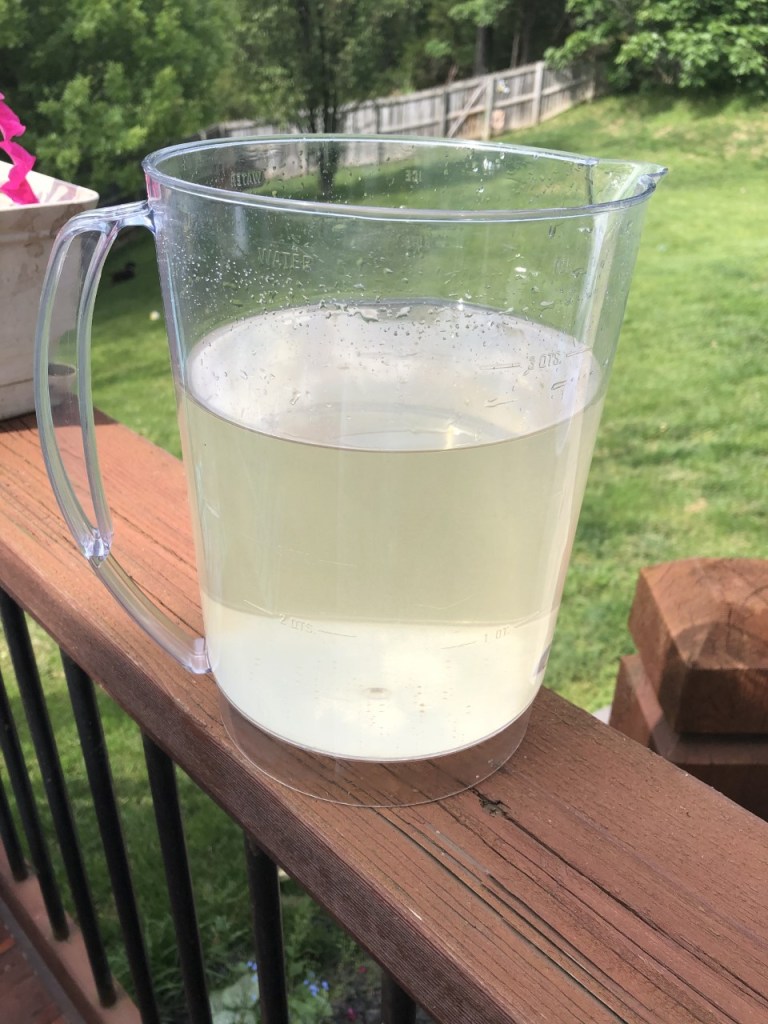
I am sad to admit that today when we went out to refill feeders the feeder in hive one was empty. I knew it would be low but hated to find it empty. First time that has happened. The bees in that hive seemed buzzier – maybe they were upset with the lack of sugar flow. Note taken. Hopefully we can keep that from happening again. Mixing sugar water in the 1:1 ratio is not rocket science but it’s sometimes tedious. I need to remember: eight pounds of sugar to one gallon of water…but I usually buy sugar in a ten pound bag so you can see where the measuring cup still haunts me. I think I just need a larger pitcher or better system in place. When I work out the kinks I’ll be sure to fill you in. For now, this is the largest pitcher I have and what I have been mixing in (it’s only partially full here because we were just topping off one of our feeders)
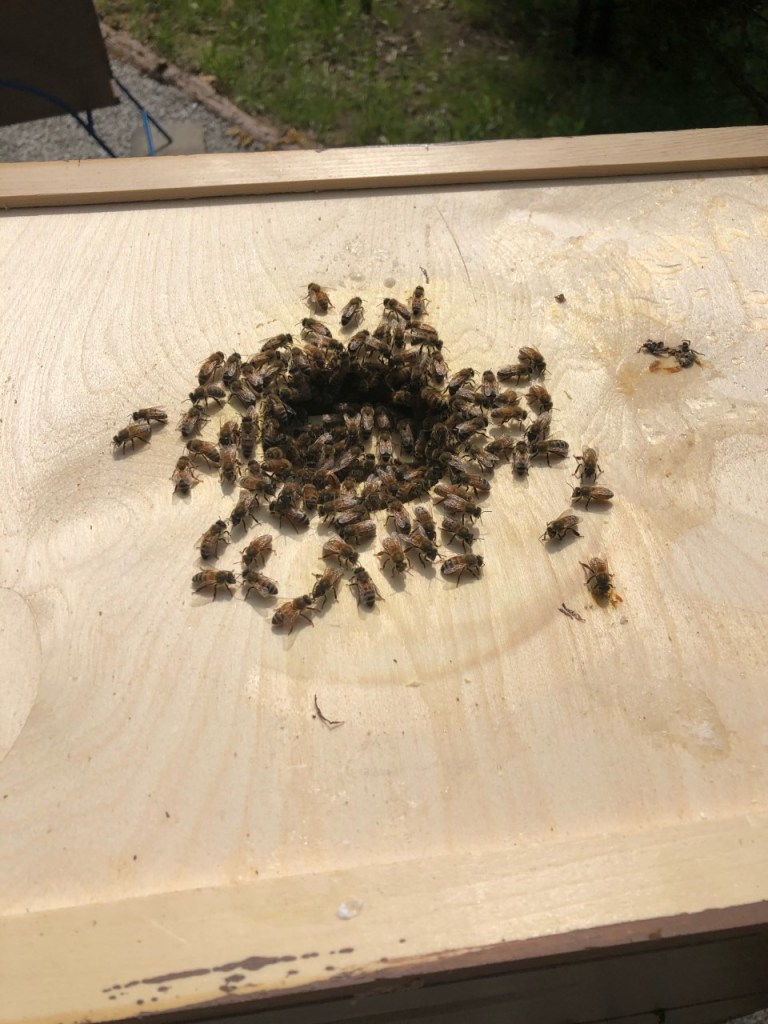
When feeding bees, you first have to remove the outer cover or lid to the hive. Beneath that sits the bucket feeder upside down. It’s just a gallon pail with tiny holes in the top. Usually the top has bees all over it but I had already brushed them away for this picture.
Sometimes mold will grow inside, I’ve been trying to wipe that away. Once the pails are refilled you have to place them back over the hole in the inner cover. This is sometimes hard to do without smashing bees. I’ve found a little patience and a small puff of smoke will drive the bees back down so the feeder can then be placed back over the hole.
This turned out to be longer than I had anticipated…being brief about bees is hard!
We were happy to see the warmer temps of summer but today we got a small taste of what it’s like to be a beekeeper (in full beekeeper gear) when it’s hot out…and it’s only going to get warmer. Sigh. Neither of us like to be hot and we actually discussed the risk vs reward in terms of stings and comfort! The extra layer of protection in a full bee suit definitely brings a sense of comfort but I am quickly beginning to understand why experienced beekeepers might opt for just a veil!
Before I forget, from last time, the picture…drone comb! A little bothersome but totally normal. A few fun things about drones…they don’t sting, they are male, larger than the workers and they only live to mate with a queen and then they die. Now, I’m wondering…these drones in our colonies, where are the queens they are mating with? Because if they don’t mate, they don’t die and they are sucking up resources in the hive! At the end of the season I believe the worker bees will kill them off because they are “dead weight” for winter. Here you can see how a drone compares in size to a worker bee.
Today when we pulled frames they were definitely drawn out. The first brood box was looking full so we added the second with the second eight frames. It will be interesting to see how long it takes for the colonies to draw out the additional eight frames that we added today. It feels like we reached a small milestone today!
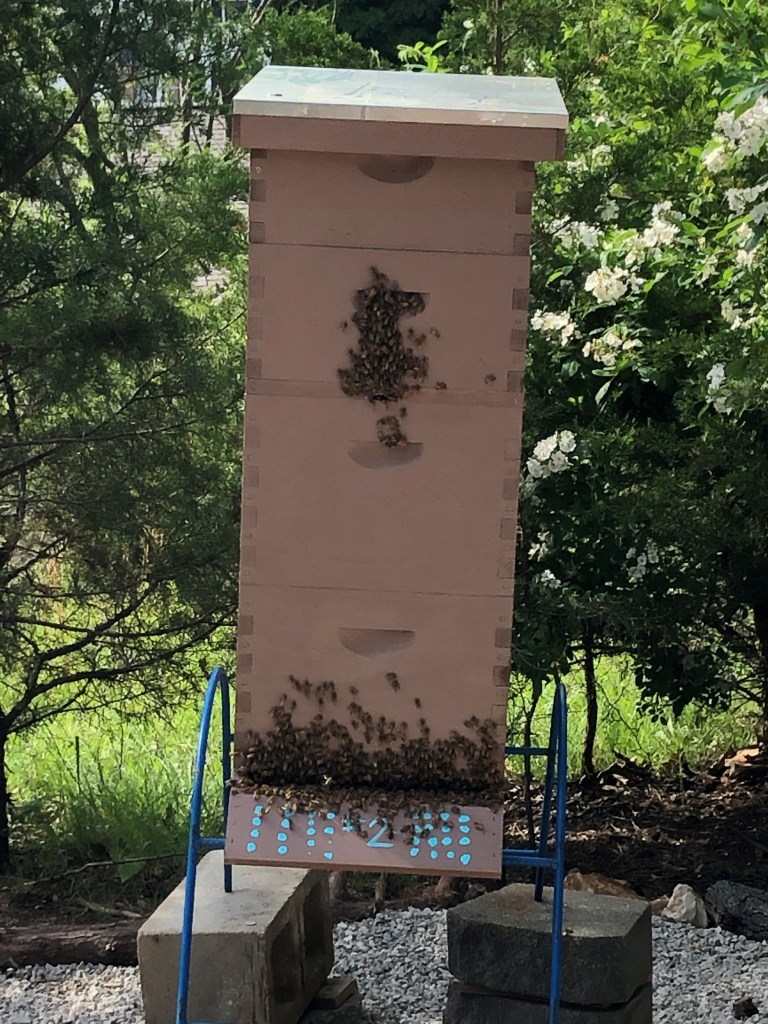
You can see in these two pictures the comparison from where we started to where we are today. The first picture has a brood box on bottom with eight frames inside of it. The second box on top of it houses the sugar water feeder. In the second picture you can see the original bottom brood box, a second brood box now full of another eight frames (instead of the feeder) and the two honey supers on top now house the feeder. Once the second brood box has eight drawn out frames we can remove the feeder and fill one honey super with frames for our honey!!! We might not have string enough colonies to get to this point this year…but hopefully by next year!
The little beekeeper is in need of a haircut and after today’s sweaty situation has decided to go with a “buzz” cut. Happy summer!
I guess. It seems like there are so many of them and they still haven’t finished drawing out the original eight frames in the first brood box. What is taking so long??? I guess it’s only been two and a half weeks since we moved them into their hives. We thought we might get to add the second brood box and eight new frames of foundation to each hive today but upon inspection it looks like they still have room in the first brood box. So we will try to be patient. My understanding is they will work up. So if I add the foundation on top before they finish what is in bottom there will be an incomplete/unfinished job near the bottom. We want them to utilize all the space but also need to keep watch to ensure they don’t run out of space! It feels like baking a cake for the first time with no instructions on how long to bake it – don’t take it out too early as it won’t be done, but don’t wait too long as it will burn. It has been cool and we have had rain…with more in the forecast. They seem to be taking the sugar water from the feeders but not at any extraordinary pace. Time will tell…I guess you can’t rush a good thing. We’ll continue to keep an eye on them.
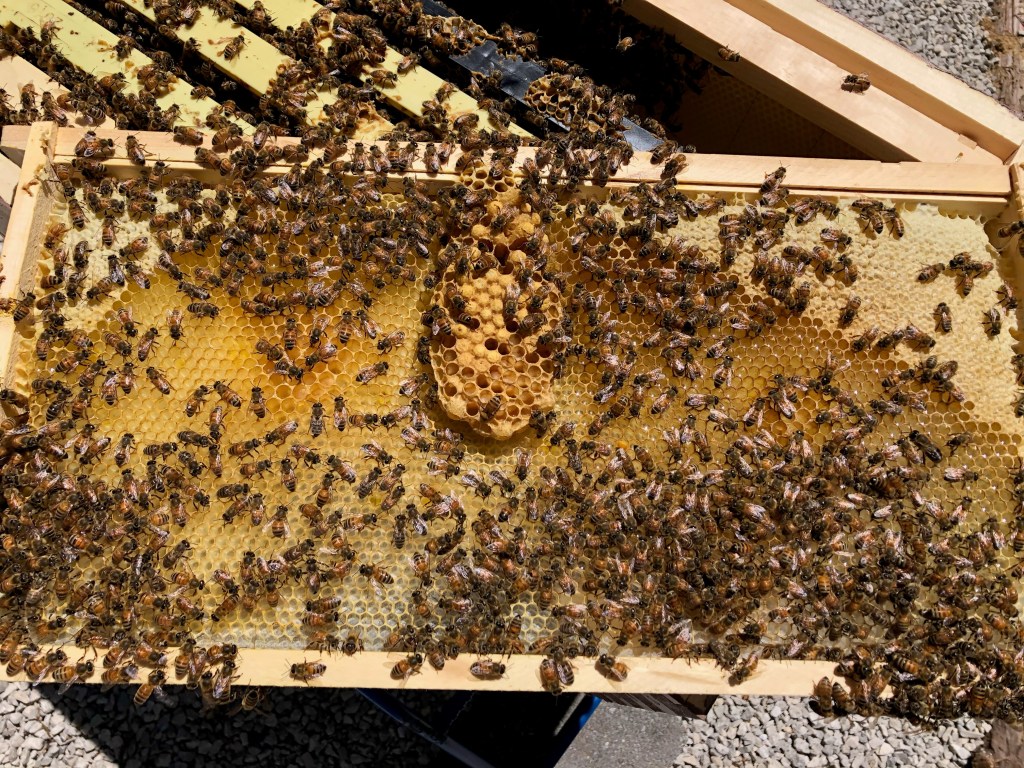
Today was the first day we opened and inspected frames without our mentor. I think we did ok. The bees did seem more “buzzy” today but I think that’s in part to a growing population. Maybe?!?!? I had planned to take a lot of pictures but my phone doesn’t respond to my touch with bee gloves on. I really like pictures but having to take off my glove to get them was a little intimidating for this rookie beekeeper. I only ended up with two photos because this frame looked odd to me. I’m not sure what is going on with it or if there is any reason for concern but I wanted to send it to our mentor for his take on it. If you look in the middle of the frame at the top, it appears that the bees are building comb in a bubble like pattern in one spot. I’ve never seen this before and am anxious to hear if it means anything.
So in desperation and curiosity I did remove my glove for a picture of this. Maybe as time goes on and we build confidence there will be more bee pics (I hope). I’ll let you know what we find out. In the mean time we’re hoping for warmer temps and sunny weather…so the bees can stay busy!
Today, with the help of our bee mentor, we successfully completed our second hive inspection. Our bees seem happy and behave well but neither hive is taking a lot of sugar water. I had sugar water mixed and ready to add but seeing that we didn’t need it I was told I could freeze it short term (good to know!) Both colonies have eggs/larvae so we know the queen is in there! Good signs. Progress is being made. They are working to draw out the frames that we added and maybe in another week or two they’ll be ready for another eight frames of foundation (the second brood box). An established hive would have a beekeeper adding supers for honey about this time…hopefully that will be us in another year!
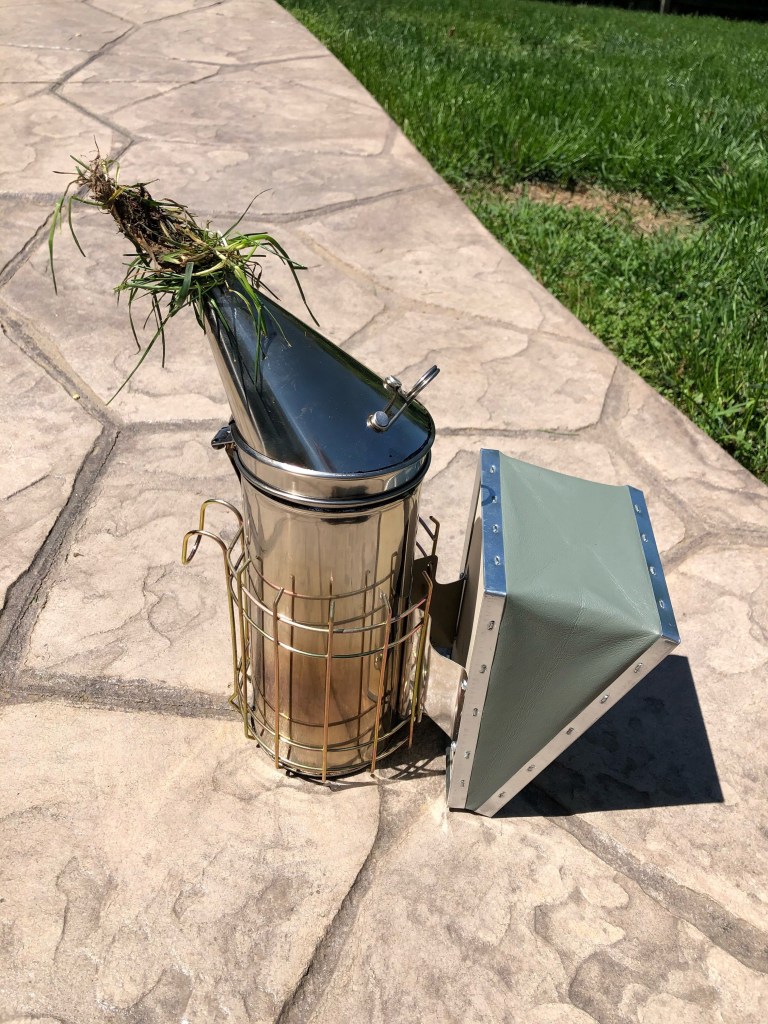
The little beekeeper did smoke the hives today…just a little. Wanted to give them a heads up that we were coming in. He did well with it and the bees responded accordingly. We did learn a good smoker tip today…when finished with the smoker, plug it with grass. It saves on the fuel and you don’t have to wait as long for it to burn out and cool!
Other things we need to learn…the life cycle of the bee! We need to study and understand this. I think it will make us better beekeepers. Stay tuned and we’ll share what we learn. I mean doesn’t everyone want to know how long a bee lives?!?!? The teacher in me will have to get an interesting blog going on the topic once I understand it all myself!
But for today, I’m so grateful that both hive inspections have gone smoothly. The bees are buzzing but they don’t come at you and they certainly don’t come at you in masses. Apparently this is not always the case. Sometime there really are “mean bees”. I guess it’s genetic. In those cases, because no one likes working with mean bees even if they are producing honey, a beekeeper might attempt to re-queen the colony. Sounds like a cool process but one I hope I never have to tackle due to aggressive bees! Thankful for the sweet little honey bees that are working hard from our backyard and hoping to avoid any/all mean bees of the world!



 Howards' Hives and Honey