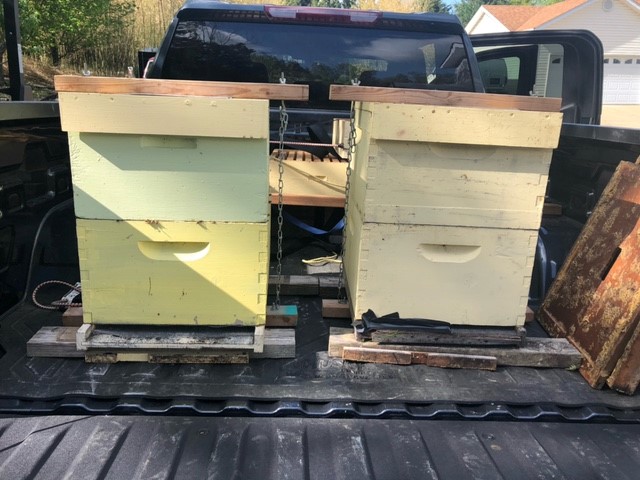
Oh happy day…we once again have hives in the apiary. It was a long cold winter and slow spring as both our hives collapsed last fall. We did sleep easier not worrying all winter about bees BUT spring was incomplete without hives. We were very blessed that our mentor was looking to reduce his hives and we were able to get two full hives (two deep brood boxes each) from him. Well established, strong hives, with lots of bees. We moved those from his bee yard to ours on Earth Day, April 22nd. He had an incredible set up for moving hives that made it very easy…all things considered.
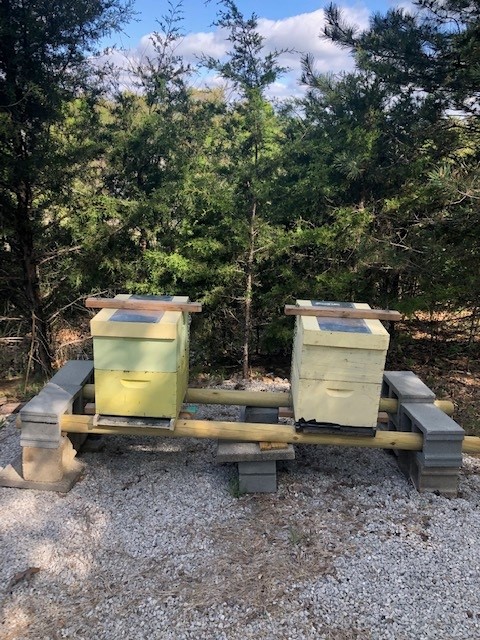
If you look close in the picture above, you can see there is a solid travel cover on each hive and the entrance is screened and duck taped to keep the bees in. Once they were placed in our yard, screens were removed – a few days later I also removed the travel covers and replaced with normal inner and outer hive covers.
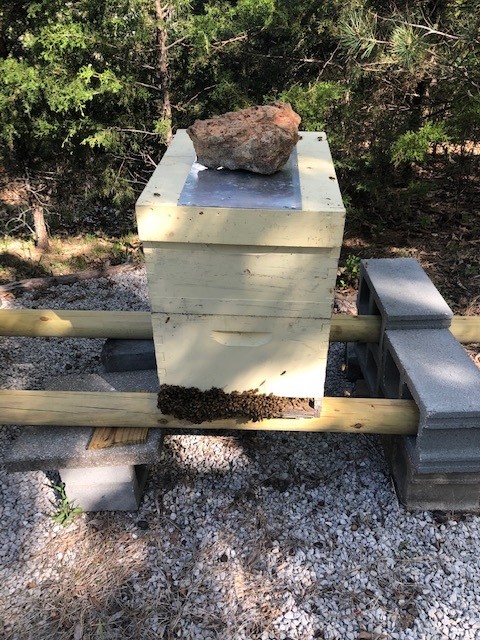
Since these were established hives we were able to immediately add honey supers to both. Hopefully the bees will have ample resources and will begin filling honey supers for our harvest in late summer.
As for that swarm trap…we took it down as the new hives were moved in. I didn’t want to chance the new hives being tempted in any way by the swarm trap. It’s been in the garage for about a week now. I need to rebait it with the lemon grass scent and find a new place for it. I’ve been told I still have a chance of catching a swarm for about the next two months. Stay tuned on that front!
We are also scheduled to pick up two nucs on May 15th. These are hives with only five frames of bees. Our brood boxes for these hives hold eight frames. We will have to be patient and let these nucs get established. It will take time for brood and bees to fill one brood box of eight frames, then a second, and then finally we might be able to add a honey super come mid summer. It will help that I have frames with drawn comb, this will save the bees time and will hopefully get to honey production quicker!
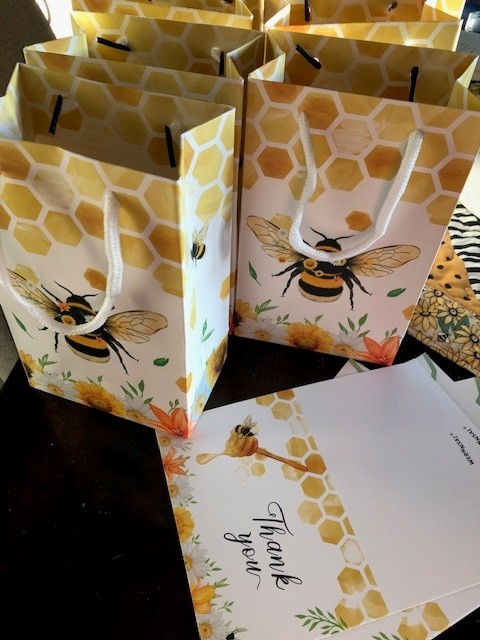
Our current honey supply is running a little low. We burned through several bottles prepping teacher appreciation gifts this week. We do enjoy sharing our honey and hope the teachers know how un-BEE-lievable we think they are!
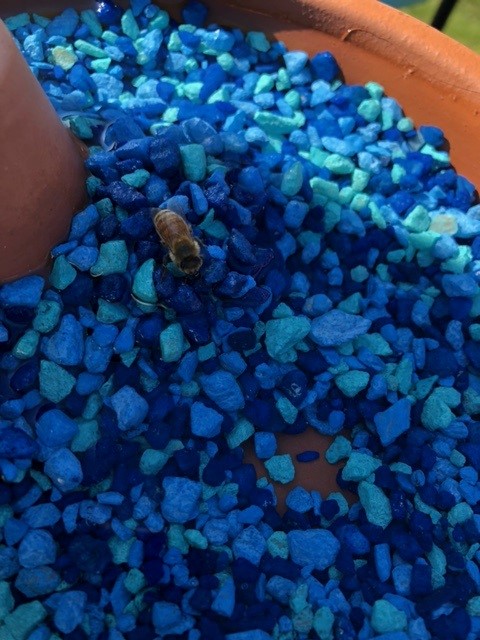
And finally, since the bees are back, I took the time to put together a little “bee bath”. I had noticed honeybees on my seedlings after watering…I thought this might accommodate them a little better. I was pleased with how it turned out and saw a bee utilizing it shortly after I set it out!!!
It will be exciting to see the progress these two hives have made in the supers. We’ll keep you posted. Bee life will get a little busier once the two nucs arrive…they will need feed and a little more attention than the established hives…exciting times!
Now that spring is here, get those gardens going, plant the flowers and maybe even make and set out your own little bee bath. I hope you see the honeybees working around your home, too.
A guy at the bee store sparked my interest in trapping swarms. My original plan was simply to stick with our own hives, get a good handle on management and once we felt like we had a good handle on that aspect of beekeeping, we might explore the idea of swarm trapping. However, we are currently beeless. Bees are expensive (about $200 per hive…just for the bees) and a swarm trap cost me $39.
Now, what is a swarm. Well, as a new beekeeper it was something we feared! Go out to check on your hive and half the bees or all the bees would be gone. Devastating. Maybe they swarm due to mismanagement? A good beekeeper won’t have bees that swarm? Maybe? I’m not sure…still learning. Swarming seems to be a natural bee behavior of a strong hive. I guess we still have things to learn about WHY bees swarm but for now…we are hoping for a swarm.
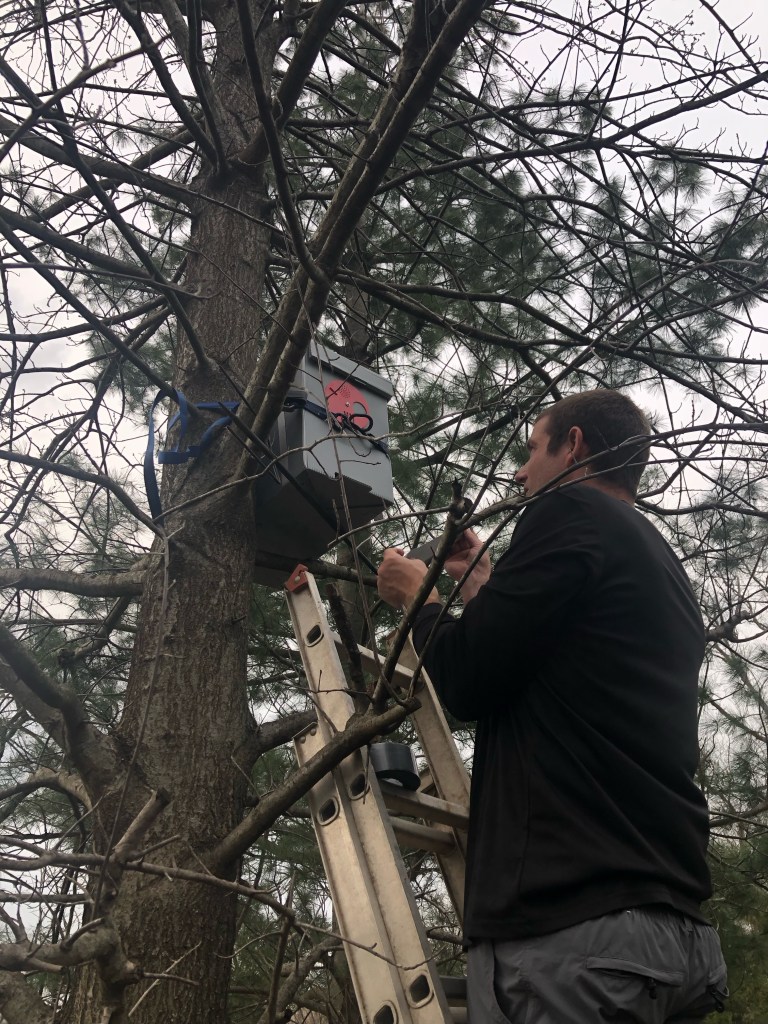
With the help of our drone bee we have placed our swarm trap in a tree.
It is set with three frames of empty drawn comb and three frames of foundation. We have also added a lemongrass scent. Now we wait and watch.
Should we happen to attract a swarm and they actually settle in…it will be interesting to see how we get the trap out of the tree. Typically our drone only does the manual labor NOT involving actual bee interaction but I’m not really excited about climbing the ladder, in a bee suit, to retrieve a box of bees. However, this is a “problem” I hope to have! Should we actually catch a swarm it should make for an interesting next blog!
With spring comes more hours of daylight, spring breaks, warmer temps, gardening, and bees! It looks like spring officially starts on Monday, March 20th. Thank goodness, I think we’re all ready to put winter behind us. The cold temperatures can be tough on us AND honey. I’ve noticed some of my stored honey starting to crystalize. Crystalized honey is thick and hard to pour but it’s completely safe to consume. A simple fix is to place the bottle in a bowl of warm water. It takes patience if it’s a large jar and is mostly crystalized but smaller bottles will return to the liquid state within a few minutes. Here’s a quick link with a general summary about crystallization if you’re interested:
Ultimately, if you notice your honey starting to crystalize, don’t throw it out…just warm it slowly until it returns to a liquid.
This winter was pretty easy on us as beekeepers…remember, we lost both of our hives last fall. We were without hives to overwinter. To say we have missed the bees would be a complete understatement. We can’t wait to get started again this spring with bees back in our yard. We have two nucs on order and will also be looking to catch a swarm. I didn’t anticipate trying to catch swarms this early in our beekeeping journey but the price of bees is a couple hundred dollars…a swarm trap cost me $40.00. As the swarm season rolls in, the little beekeeper and I will be placing and keeping our eye on our swarm trap. Stay tuned for details on how that goes.
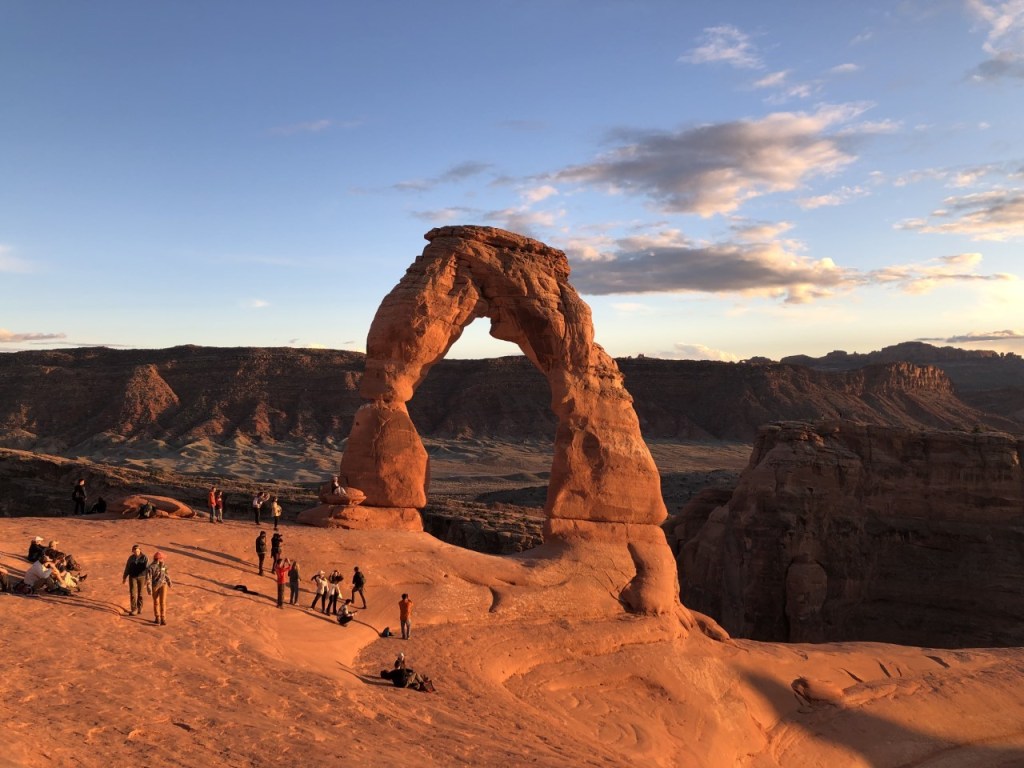
As long as we are talking “spring” let’s talk about our spring break out to Arches National Park. If you’ve never been, it’s worth a trip. We spent a few days hiking and taking in the surrounding sites.
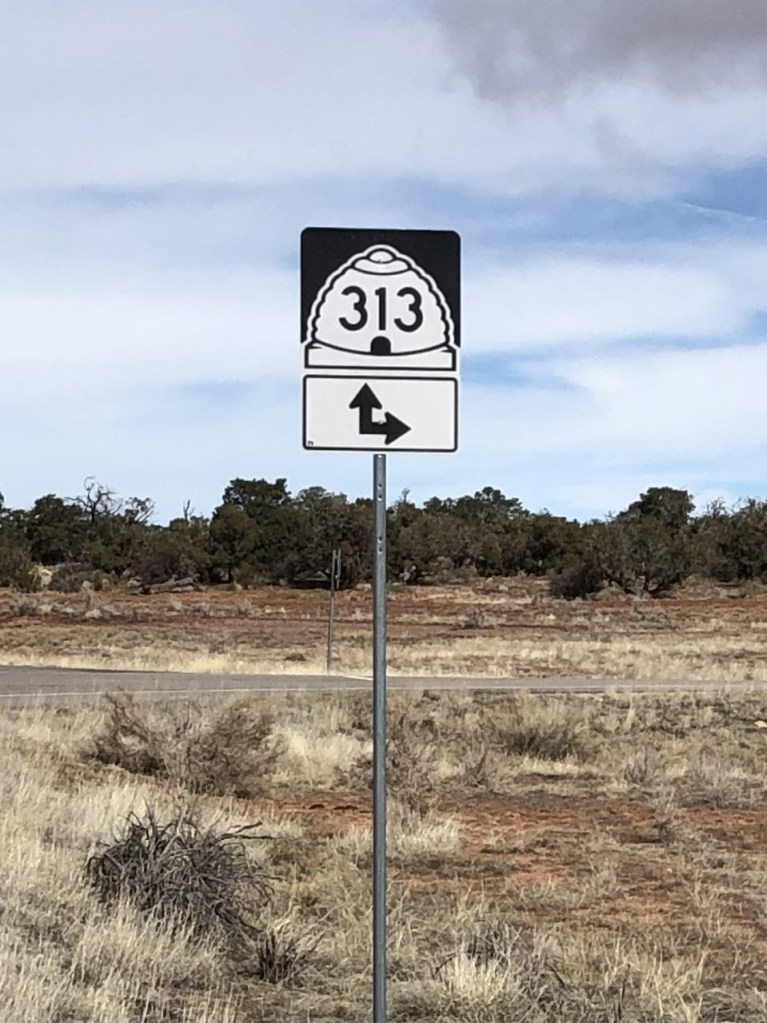
As we were driving in the area, I noticed their highway signs looked to have a beehive on them. I found this particularly exciting!
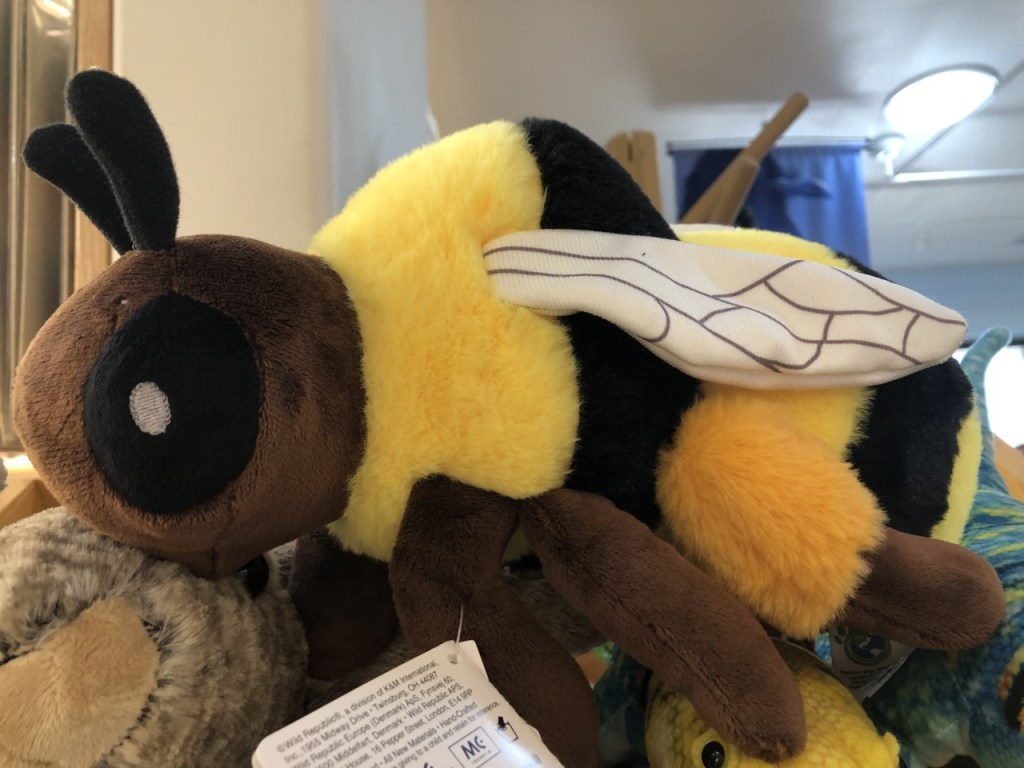
I also noticed stuffed bees in the visitors centers. At that point I was certain there had to be a connection.
Curiosity had me ask and I learned that Utah is “the beehive state”. The state flag even has a beehive on it. Who knew?
The honeybee is also the state’s official insect. While Utah ranks 24th in US honey production I didn’t see any bee boxes on our trip. I’m not sure if the bees would thrive in the Moab area or not…it was hard to imagine what the bees would work. There’s just a lot of rock everywhere. Nonetheless, Utah moved up on my list of favorite states for two reasons on this trip…arches and bees!
We’ll keep you posted on our plans to expand this spring. We had hoped to double our hives this year thinking additional hives would provide more opportunities and resources to grow. There’s also the fear that losses could be greater as well. The little beekeeper is determined to manage one hive all by himself. I think he is feeling a little left out/hands off when it comes to the bees so I agreed that he could 100% have his own hive. I think he has forgotten how many times he opted out of hive checks because it was hot or he had other things he needed/wanted to do. Either way, I’m all for him having the ownership and responsibility…it’s one of the best ways to learn in my opinion. I really hope his hive will do well. Maybe it will even be a swarm we catch this spring…how cool would that be?!?!?!?
Try to enjoy your last few days of winter – we are beyond ready for spring to settle in and stay!
Yes, as beekeepers we are learning all about stings…physical and emotional. Let’s start with the emotional. Sadly, this past month we lost the second of our two hives. Talk about heartbroken. We had gone out to place the candy board on for winter feeding and realized the hive was virtually empty. Dead bees everywhere and little to no honey. Talk about a sad day. After a successful honey harvest in August, we were now beeless. And I thought a beekeeper with no honey was bad…a beekeeper with no bees is even worse! There were so many dead bees I was able to scoop them into a jar.
I can’t tell you why I decided to scoop them into a jar…maybe I thought I’d have an opportunity to use them for educational purposes at some point? Time will tell. Either way, you can see here from the picture how sad dead bees are. I also can’t tell you what happened to the hive. Maybe it was hive beetles? Maybe the hive was robbed out? I just don’t know…and not knowing what happened stings, too.
Now on the day of discovery it was a cool day. Bees weren’t really flying but the little beekeeper and I had suited up, we aren’t yet brave enough to really do much with or around hives without protective gear. There were a few bees still hanging out in the hive as we disassembled it for storage. After getting the hive stored away, we hung our bee suits back on the hooks in the laundry room. This leads in to our first physical sting. Later thay night the little beekeeper went in to take the clothes out of the dryer for me and really started hollering. I knew he was hurt but had no idea it was a bee sting! He had stepped on a bee in the laundry room. She must have hung on to one of our suits and made her way to the floor where he stepped on her with his bare foot. With all the screaming and yelling, I panicked and pulled the stinger straight out…which he later reminded me is the wrong way to remove a stinger! I think you are supposed to scrape it out to keep venom from going in. Whoops. Next time I’ll hopefully remember that. From there it was a lot of ouching and complaining but he was fine. Being on the bottom of the foot might have helped as that skin seems thick and tough but it was red and he did complain. No epi pen was needed and he did fine with it. Ice and numbing burn cream was the route that provided the most relief. By the next day he didn’t even mention it.
Our first sting was in the books. We knew it would eventually happen but I thought it would be me, not him! Not looking forward to my first sting…hoping to put that off as long as possible! All in all, stings are tough. Both kinds. We are very sad to be beeless but are determined to pick it back up in the spring. We will have to come up with a plan to buy more bees and possibly expand. We had wanted to increase our number of hives but the thought of investing in more hives only to lose them is a stinger, too. We’ll talk it all over with our bee mentor after the holidays and hopefully come up with a plan that makes sense. Stay tuned – we’ll BEE sure to keep you posted!
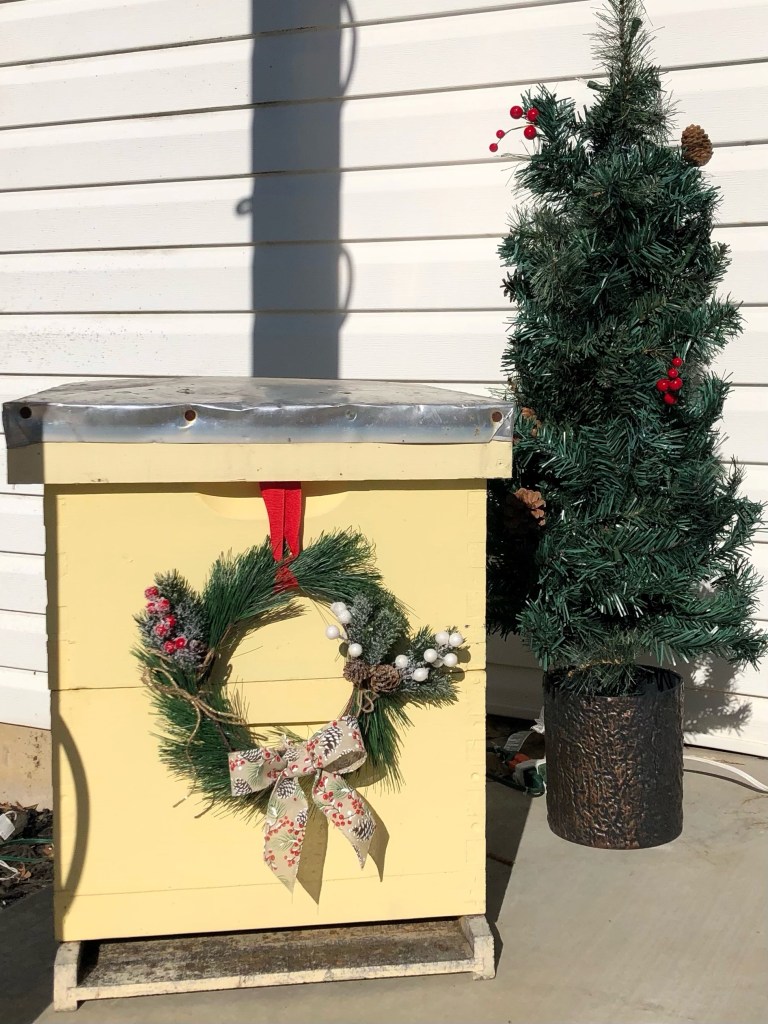
For now, the only hive we have is the decorative one on the porch. This hive is special to me as it belonged to our mentor. A ten-frame hive…equipment he used for his bees. I had fun making it festive for the holidays – in the future I have ideas of lots of hives full of bees each with their own wreath. Stong hives that will be toasty and warm and able to pull through winter to thrive in the spring…producing lots of honey for us. A girl can dream, right?
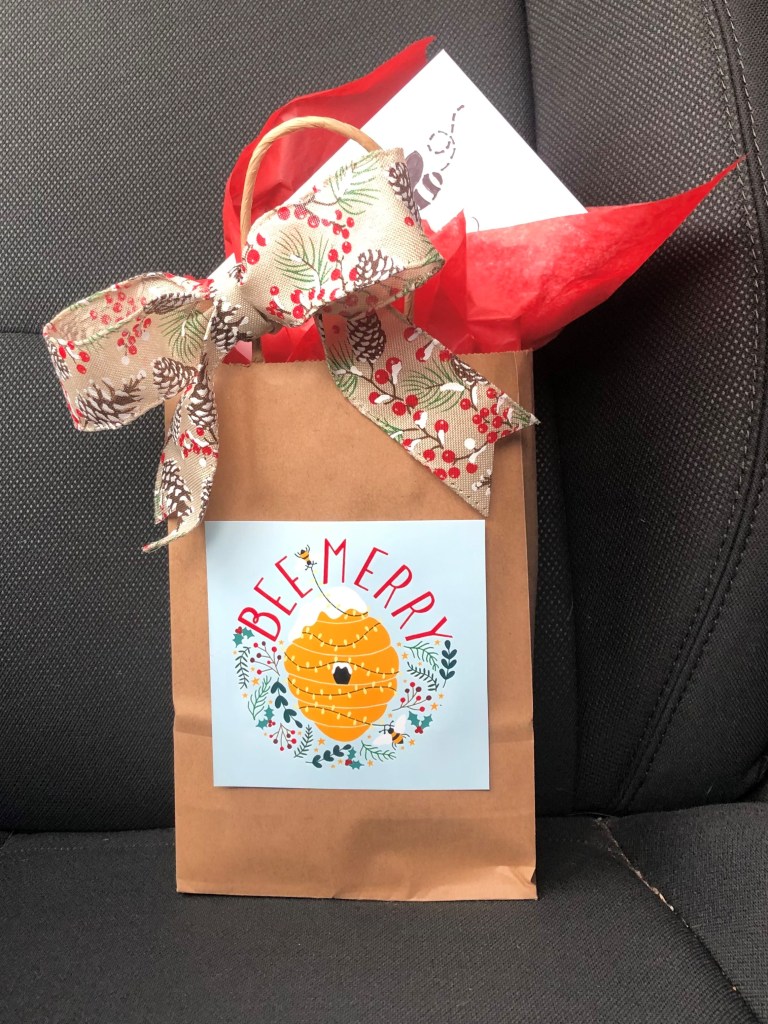
While we may not have bees, I am thankful for the honey we were able to harvest last fall. Sharing honey is still one of my favorite parts of beekeeping. This is the first Christmas we’ve been able to distribute as a small gift to friends and family. Is it weird that I even took honey to my endodontist? She seemed so interested in my bees, was kind, and didn’t hurt me when I needed a root canal – being able to take her honey made the visit a little better for me!
The only perk to not having bees right now is that I won’t worry all winter long about them. But honestly, I’d rather worry than not have any bees. The birds will have to keep me entertained through the winter months. I enjoy them almost as much as bees!
We will be ready once spring arrives. Next year is a big year as our queen bee will turn sixteen and I have a lot of ideas on a “SWEET” sixteenth birthday that includes a lot of honey. Maybe I’ll even let her paint one of our potential new hive boxes pink? Maybe.
But until then, we hope you’ll be cozy in your own hive for the holidays. Stir some honey into a hot tea and sip it from your favorite mug, fix some biscuits or cornbread and top with butter and honey, fix a peanut butter and honey sandwich, whip up some honey mustard for a ham sandwich…so many uses for honey this winter season. And don’t forget…if you get a cough, a teaspoon of honey can sometimes take the edge off.
Merry Christmas from our hive to yours and Hap-BEE New Year, too!
For those of you that would like the details I will elaborate…remember back in the spring when we accidentally removed the supersedure cell in Hive #2???? I was heartbroken because it looked as if the hive was trying to raise a strong new queen and the little beekeeper and I scraped it off thinking it was a swarm cell. Well, I’m now wondering if I might be paying the price for that mistake. I’m not sure. I was trying to assess the hives to determine if fall feeding was necessary. (that’s a whole blog topic in itself – fall feeding, I’ll have to come back to that). My mentor wanted me to make sure all was right with the hive before feeding…makes sense, why feed a failing hive. Quickly I could see there was no larva or capped brood on any of the frames and the bottom brood box was essentially empty. Kinda heartbreaking. There were bees but in the fall with no queen – they are doomed!
I was advised to break down the hive. Shake out the bees, freeze the frames, and store until next spring. This process literally took me days. Shaking bees out was the first step…it’s a little bit fun and a little bit intimidating. The little beekeeper is back in school and as much as I wish he would have been a part of all this, scheduling had me doing it on my own. So, I prepare the best I know how and go open the hive and shake the bees out onto the ground. The idea was that they might find their way into the neighboring hive. You have heard the phrase “my ears were ringing” well…my ears were buzzing! So many bees. Flying but not too aggressive in any way – there’s just so many of them when you shake them out of their home of honey! Try to imagine. A video would have been better but here are a few pictures of the process. See all the bees on the ground?
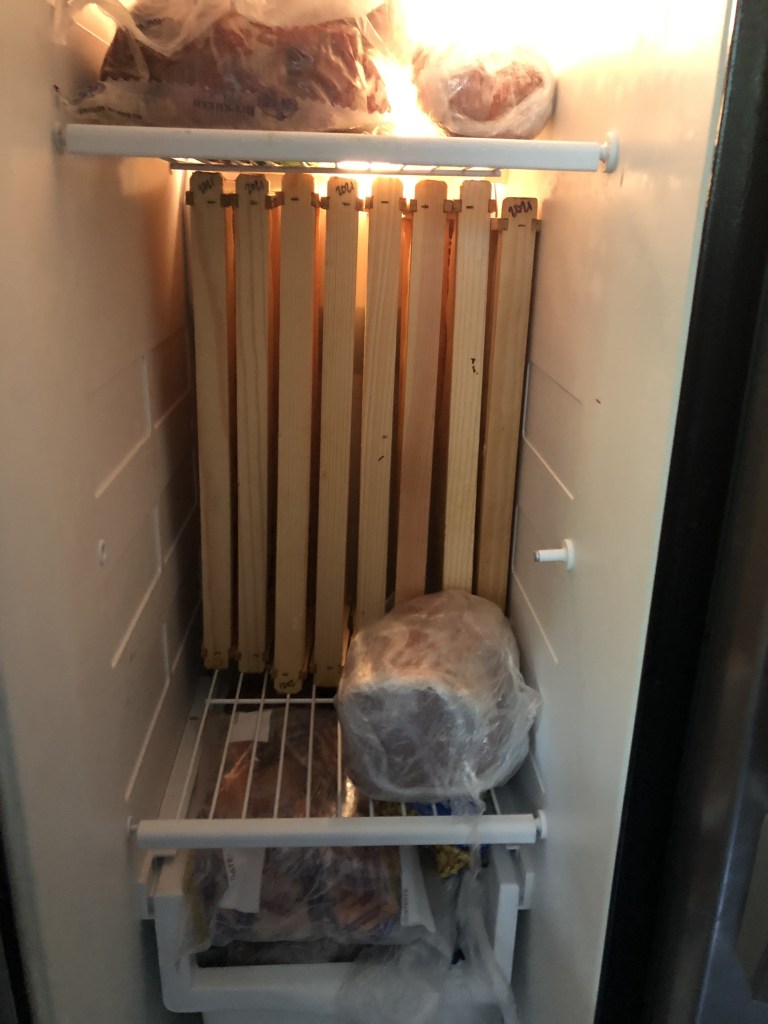
Once the bees are mostly out you have to quickly get the boxes and frames away from the area because they want to come back to it! I put the boxes in the garage and close the door but I still have a handful of lingering bees. Keep in mind, there’s also honey in these frames, some capped, some uncapped. I’ve had issues in the past with honey drawing ants. The last thing I want is a bunch of ants in my garage. You might be wondering why not just harvest the honey…well, this is honey in the brood boxes…not in my honey supers. It’s my understanding that honey in brood boxes is for the bees. I also used a chemical to treat for mites. This chemical is only to be used without honey supers. Harvesting honey for human consumption from boxes and comb that were exposed to chemicals seems like a bad idea! My next step is to freeze all 16 of these frames…frames that are a little larger than super frames. I’ve frozen super frames in the past. It’s all part of the process following honey extraction. It’s a pain. But those frames are also empty and smaller. I can freeze a few frames at a time and rotate them in and out of the freezer without the concern of them drawing ants. This is a bit of a different situation – the sooner I can get these frames to a freezer the better. However, my freezer is full. I wasn’t prepared for this. There’s just no way these frames are going to fit.
My first thought was “who do I know with a deep freeze”. But no one wants this mess in their freezer. The drone and I had talked about purchasing a freezer for freezing frames…what better time than now?!?!? I was able to find one available for pickup and our drone picked it up after work, got it to the basement, and had it all hooked up on Tuesday night. We waited overnight for it to get cold and the next day I was able to drop both brood boxes in. They just barely fit but for now this is perfect!
Sigh. Isn’t this getting a little out of control? I forgot to mention, Tuesday morning, after shaking the bees out on Monday and hoping they would find their way to the other hive…I go out to observe and there are a bunch of bees still on the ground.
The morning temperature was cool. They were all huddled and they were alive. Ugh…this beekeeper hated to see this. I wanted to somehow encourage them to the other hive. When I broke down the hive I had accidentally left an entrance reducer on the ground (it’s just a thin piece of wood) and many of the bees were attached to it. I was able to move that piece of wood and all the bees on it to the front of the other hive. I also placed some feed (sugar water) in a hive top feeder and placed it on Hive #1 . I’m not sure if this was a good idea or not but my thought was maybe it would make the bees happy and they would be more willing to welcome the new bees. Another thought was maybe the bees looking for a new home would be encouraged by feed in the hive. I really have no idea – and I didn’t get my mentor’s advice on that front so I hope it wasn’t a decision that caused any more harm than good…but I had to do SOMETHING!
By the next day I didn’t see any more bees just hanging outside the hive. Hopefully they merged and now have one strong hive that will survive winter.
It was certainly a week filled with more bee drama than I anticipated. All in all, it worked out. Disappointing that we are down to just one hive but optimistic we can pull the one through winter and add additional hives next spring.
On a different note – I thought this was interesting…
This year’s honey on the left. Last year’s honey on the right. Observable change in color. I’m partial to the first-year color and taste but this is the last of it. This year’s harvest is lighter in color but is still sweet in taste. We’ll be working to distribute and share in the months to come. I recommend it on biscuits or pancakes…a pretty tasty fall kind of breakfast in my opinion!
Enjoy your fall season and keep any flowering plants you may still have watered. It’s been so dry. I think the bees are still out trying to gather anything they can find in order to prep for winter. Goldenrod has been in bloom for a few weeks now. I’ve been told the honeybees will work that.
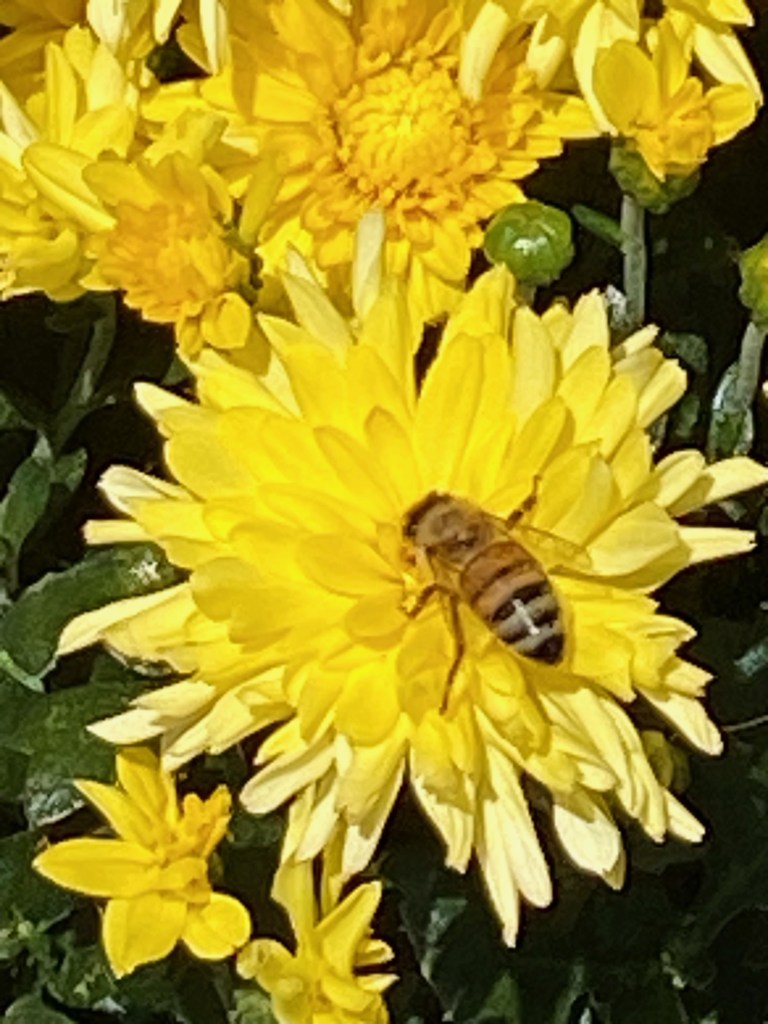
I was able to see some pollen still coming in with the bees yesterday but it’s minimal compared to what they bring in each spring. This was a picture a dear friend of mine sent to me…
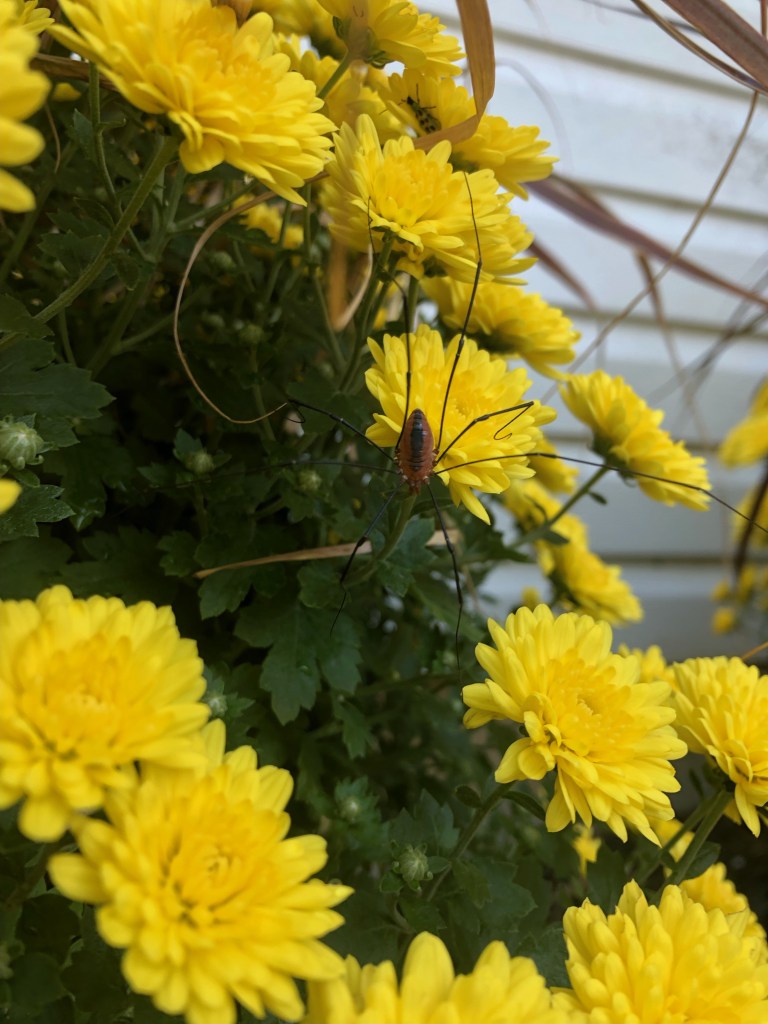
Not too often do I see a honeybee on a mum…I’d read they don’t frequent them due to spiders (who knows if that is true). I did notice this daddy long leg on my mum the other day…wonder if they eat bees?)
Bees do have predators like any other animal or insect. I’ll have to do some research to increase my knowledge. I DID see small hive beetles in Hive #1 yesterday, too. They are the worst for beekeepers and bees. It’s pretty cool to watch the bees aggressively attack them. A strong hive is the best defense against small hive beetles but I did add an unscented Swiffer cloth to the top of the frames.
I’ve been told other beekeepers have had success with these as traps. Anything I can do to help give the bees an edge – no need to waste time and energy fighting off beetles if a Swiffer is helpful to them. They will be using their energy this time of year to prep for winter and kill off any drones left in the hive. Drones have served their reproductive purpose for the season. The worker bees will kill them and remove them from the hive. This way they won’t eat up resources through the winter – next spring new drones will be raised as needed (at least I think that’s how it works).
I’ll continue to assess the overall health of Hive #1 as we prepare for winter. Next time I’ll have to update you on the feed vs not to feed decisions that are all part of fall management. Stay tuned and please continue to root for the bees!
It’s been busy. We have successfully bottled all the honey and found places to store it. We are still in the process of freezing frames to prevent damage by wax moths. We have treated the hives with apiguard (a simple process that just mostly requires timing) and we have made several stops in the local bee store where we cash in on free bee talk. The little beekeeper and I were also able to attend a local beekeepers meeting where we grabbed a few souvenirs and had the privilege of listening to a guest speaker.
Check out https://www.stevensbeeco.com/ for additional info. I could try to summarize what this guy puts into practice but I’m sure I wouldn’t do it justice. Being a Biology major I find it all so incredibly interesting…but even at that, a lot of what he discussed was above my head on the bee front. So much to learn, so little time!
At the same bee meeting we had our first real life introduction to bee drama! Neighbor issues. “Your bees are in my swimming pool” kinda thing. City council was scheduled to have a meeting. I don’t know if the beekeeper will be able to keep her bees or not. I’m not sure how many of my neighbors know we have bees but the ones that do haven’t been anything but supportive. I really hope we can keep it that way!!! And I’m thankful not many of them have pools.
I’ve been trying to “heft” (lift from the back to see how heavy they are) my hives more frequently. Heavy equals honey. The bees will need a plentiful honey supply to make it through winter. Hive #two is significantly lighter than hive #one. I’m sure we will have to feed this fall. It was also suggested that I might trade out frames between the two hives…swap an empty or light frame from hive #2 with a full frame of honey from hive #1. Seems like a good idea but I want to check with my bee mentor first to make sure I understand the risk vs reward on such a management strategy. I’ll keep you posted.
As summer comes to a close and fall is approaching I have noticed more bees on my flowers. They are welcomed to any and all flowers in my yard but I do notice they have preferences. Rarely will I notice a honey bee on my petunias while others seem to really attract the bees. Whatever flowers you might have in your yard, I’d encourage you to keep them watered and blooming through fall if you can. I can’t help but wonder if I’m seeing more bees now as they maybe become more desperate for resources?!?!? Either way, I sure enjoy seeing them at my flowers near the house. Bees, butterflies, hummingbirds…plant the flowers and all these fun little creatures will come!!!
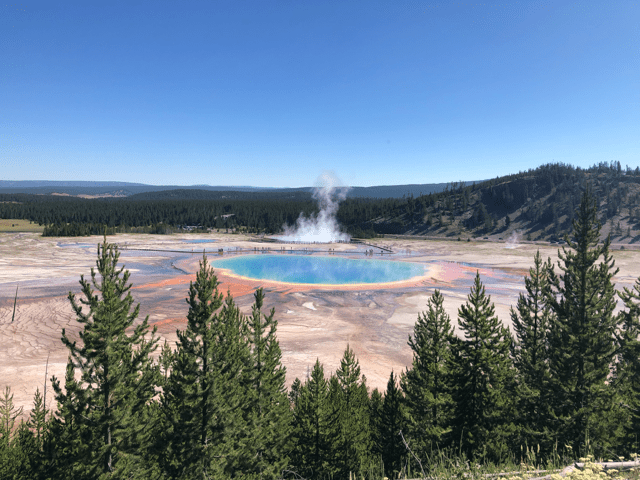
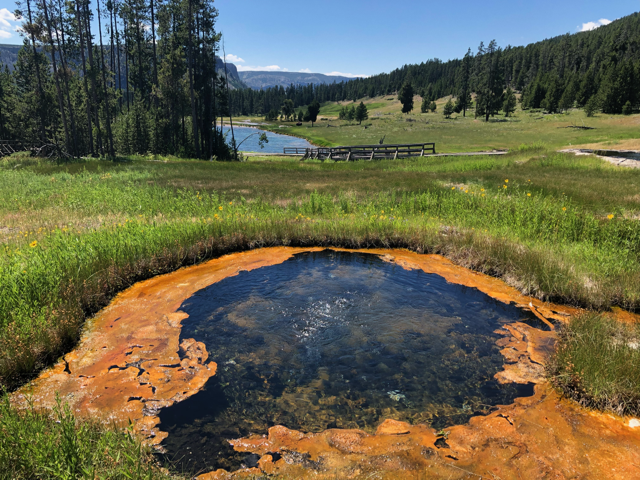
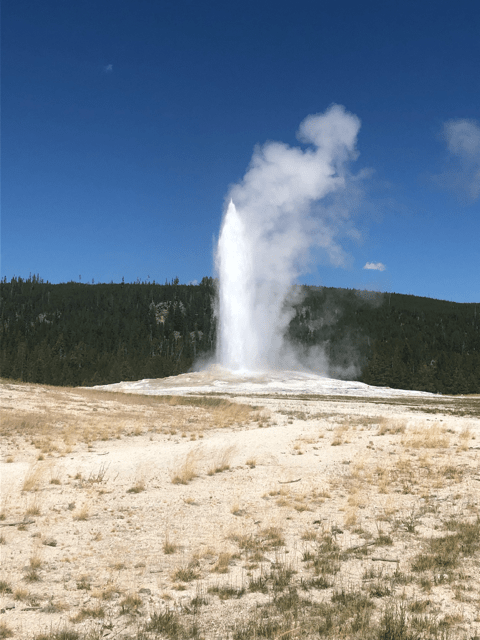
I can’t believe I forgot to include Beehive Geyser in the last post!!!! We were there to see Old Faithful. I had no idea there would be anything so beeish in this area of the park. You can imagine our excitement when we stumbled upon “Beehive Geyser”. It’s right there in the same area as Old Faithful but only goes off once or twice a day. We were not lucky enough to see it erupt but from the pictures you can see how it got it’s name. Just a little bee fun in an area where we least expected it!
Sunday. The first day of the week and last day of the weekend. I always dream of slow Sundays. A day that starts with church and ends with family dinner. It doesn’t always play out like that for us…life can be busy. I feel like our family has been busy like the bees. Summer is slipping away, and school will be starting soon. Bees are fantastic “pets” to have as you can be away all summer long and not need anyone to care for them – no feeding or watering necessary. They take care of themselves!
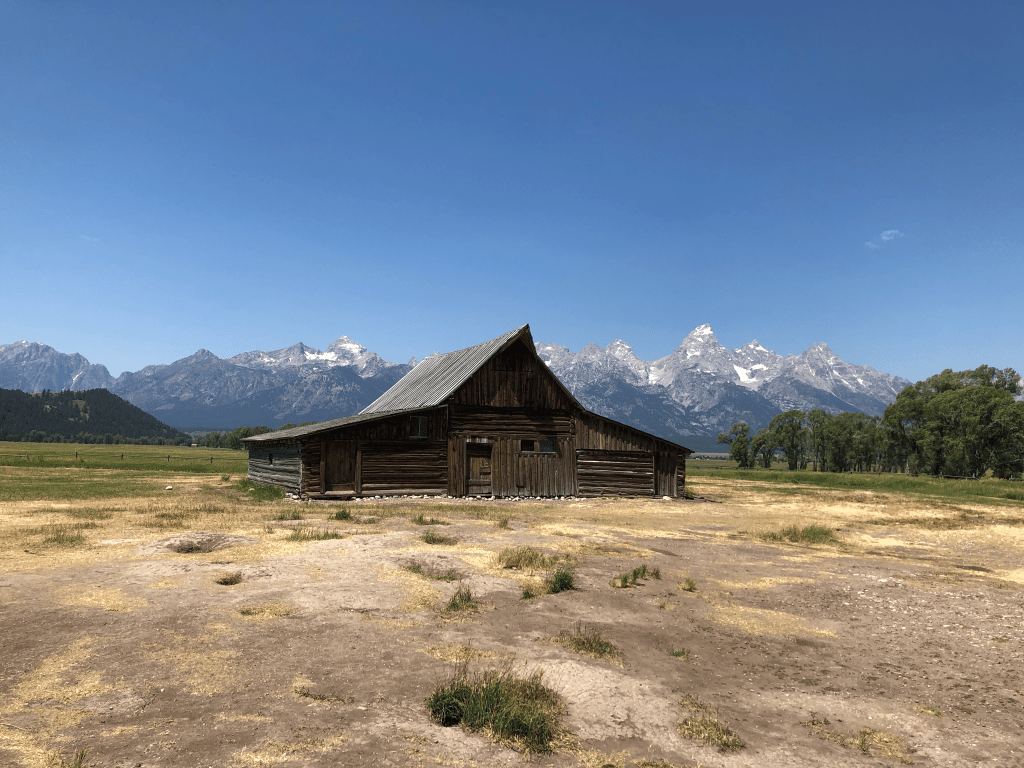
We were gone a little more than normal this summer. We had time with family at the lake and at the beach. We were also able to take on Yellowstone and Grand Teton…a ten-day trip that I’m still not unpacked from.
Throw in a family reunion, a teenage room makeover and honey extraction…I’m glad it’s Sunday, we are home, all that is behind us, and we are headed into a new week!
But let’s talk HONEY EXTRACTION!!! Yes, that happened this weekend. On Friday our mentor came to assist in assessing the hives and pulling the honey supers. After all my observations and worry, I am happy to report that both hives seem to be healthy. Hive #2 will likely need some feeding this fall – that hive wasn’t as heavy with honey for the bees. We’ll feed this fall to give them a boost in hopes they will make it through winter.
August might be a little late for harvesting honey – August is generally when the first Apiguard treatment is applied (for mites I believe). We’ll have to tackle that this week when temps hopefully drop below the 90’s. It’s been so hot!
On Friday we pulled three almost completely full honey supers. One off hive #1 and two off hive #2. Hive #2 had a third super with minimal honey in it. I was happy that hive drew out all the frames of foundation in the third super…that will be a bonus next year.
In order to pull supers you first have to get the bees to evacuate. We want the honey without the bees! Using a fume board and some stinky stuff you purchase at the bee store seems to be the most effective method. Simply spray the fume board, remove the hive cover, and replace with fume board. Wait about five minutes and in that time most all bees will move down from the supers and back into the hive brood boxes. This makes it very easy to pull the supers without bees. From there we had to transport the heavy honey supers to the truck for transport. If you don’t move quickly the bees will find the honey on the truck – we covered with beach towels to detour them from moving back in to collect honey from the supers.
It was so hot and humid on Friday. Wearing a full bee suit working to remove only four honey supers from two hives was a lot of work! I suppose it’s good for me but…I just don’t like to be hot. 😩
Again this year, our mentor had us to his house to extract the honey from the frames. He has an incredible set up. We were able to uncap the honey from each frame.
This exposes or frees the honey so it can be spun from the frames in the extractor. It took a few hours to pull all of our thirty-two frames. The honey runs from the extractor to the bucket. We came home with almost two buckets of honey. From the bucket it has to be strained. Straining removes any bees that might have slipped in and it also removes the excess wax cappings.
I think we hit close to forty-six pounds of honey this year. That’s up from last year’s forty pounds. Once it’s all filtered it’s ready to be put in containers. We filled all sizes and sorts this year…
I opted to use the jars as decor in the kitchen. It was also an easy storage option…as long as my cabinets stay attached to the wall – all that honey is heavy!
All in all we filled over fifty jars. Hopefully this will be enough for us to not only be able to share but enjoy ourselves, too. The little beekeeper really wants to sell the honey but I don’t think I’m there yet. We’ll see how it all plays out. My mentor suggested selling it high when we do decide to sell…he understands all the work that goes into that little bottle of honey!
We started the extraction process on Friday and finished bottling late Saturday night. We squeezed in a family reunion on Saturday and would you believe I won a bee wreath!!! I love it!!!
We set out the extracted honey supers for the bees to “clean up” they return to those supers for any remnants – works out nicely that they even clean up any remaining messiness from extraction.
I placed the supers on the driveway and the bees quickly found them. It’s interesting to see them work.
As of today, it looks like they are losing interest and feel their work here is done. See the mess of wax on the ground outside the boxes…that wasn’t there when I initially set them out. This evening I’ll bring the remaining supers into the garage…from there each frame gets placed in the freezer for about three days (a real pain reserving freezer space for honey frames). If my understanding is correct, this process prevents wax moth damage. If wax moths damage my super frames the bees will have to spend energy building comb on foundation next spring – that takes time away from their honey production. Returning drawn out frames to them allows them to skip the process of drawing out comb and allows them to get straight to the business of honey…so freeze the frames is what we will do. There is another method to prevent wax moths…it might be worth me looking into.
With that, I think you are all caught up! I’m tired but I am so happy to have an abundance of honey in the house again. I have so many ideas on what to do with it and how to share it…stay tuned and maybe even watch for some honey coming your way!
Time flies when you are having fun! June and July were packed for our family. We just returned home from ten days away (as a beekeeper I must stop planning time away during the last weeks of July as that is honey harvest season) and now that August is here we are officially home for a long while!! There’s no place like home and while we do enjoy traveling we are also very happy to be back home to our hive.
There’s that saying…”home is where your honey is” and I have been so curious and trying not to worry about honey for so long now. If you remember, the spring brought some drama and concerns and for months I’ve been keeping distance from the hives and hoping all was going well. Observing the hives from a distance clearly shows they are very different. One hive has one super and a ton of bees all over it. They beard all the time and have a lot of activity going in and out. All good signs. The other hive has three supers on it but just doesn’t have the apparent abundance of bees. I’m not sure what to conclude about hive #2 with the three supers…so today we suited up in the heat and went to investigate. I was tired of wondering.
We dug in to hive #2 first because it’s the one I am most “concerned” about. While I still didn’t feel there were many bees in there the third super had some honey in it – not capped but pretty golden honey. Digging deeper we could see that supers one and two were also full of capped honey. That’s great! In terms of honey supply I wasn’t able to pick up on any concerns. The hive is heavy and looks to be full of honey. I hope once we get the supers off that I’ll be able to get into the brood boxes and confirm that the queen is still laying. A drop in number of bees makes me concerned that there could be an issue with the queen. But that’s a problem for another day. For now, I’m optimistic that hive #2 will yield at least two supers of honey.
As for hive #1…it was heavy and so full of bees we didn’t even dig into it. All signs would indicated the one super should also be full of capped honey.
In conclusion, assuming we’ve made no major oversights and nothing goes terribly wrong between now and Friday…we should have at least three supers full of honey to extract!!! That’s one more super than we had last year, so in theory we will have increased our honey supply. I really hope it all plays out. I won’t rest easy until that honey is in jars inside my home!
We are scheduled to extract with our mentor on Friday. I am very anxious to have him take a look at the hives and help us assess their overall wellness. We will need strong hives to make it through the winter. Honey makes me happy now but ultimately we will have nothing without a strong queen/hive. Stay tuned…I hope to have a happy report with lots of honey pictures to share soon!

























 Howards' Hives and Honey