I’m queenless again. There. I said it.
For those of you that would like the details I will elaborate…remember back in the spring when we accidentally removed the supersedure cell in Hive #2???? I was heartbroken because it looked as if the hive was trying to raise a strong new queen and the little beekeeper and I scraped it off thinking it was a swarm cell. Well, I’m now wondering if I might be paying the price for that mistake. I’m not sure. I was trying to assess the hives to determine if fall feeding was necessary. (that’s a whole blog topic in itself – fall feeding, I’ll have to come back to that). My mentor wanted me to make sure all was right with the hive before feeding…makes sense, why feed a failing hive. Quickly I could see there was no larva or capped brood on any of the frames and the bottom brood box was essentially empty. Kinda heartbreaking. There were bees but in the fall with no queen – they are doomed!
I was advised to break down the hive. Shake out the bees, freeze the frames, and store until next spring. This process literally took me days. Shaking bees out was the first step…it’s a little bit fun and a little bit intimidating. The little beekeeper is back in school and as much as I wish he would have been a part of all this, scheduling had me doing it on my own. So, I prepare the best I know how and go open the hive and shake the bees out onto the ground. The idea was that they might find their way into the neighboring hive. You have heard the phrase “my ears were ringing” well…my ears were buzzing! So many bees. Flying but not too aggressive in any way – there’s just so many of them when you shake them out of their home of honey! Try to imagine. A video would have been better but here are a few pictures of the process. See all the bees on the ground?


Once the bees are mostly out you have to quickly get the boxes and frames away from the area because they want to come back to it! I put the boxes in the garage and close the door but I still have a handful of lingering bees. Keep in mind, there’s also honey in these frames, some capped, some uncapped. I’ve had issues in the past with honey drawing ants. The last thing I want is a bunch of ants in my garage. You might be wondering why not just harvest the honey…well, this is honey in the brood boxes…not in my honey supers. It’s my understanding that honey in brood boxes is for the bees. I also used a chemical to treat for mites. This chemical is only to be used without honey supers. Harvesting honey for human consumption from boxes and comb that were exposed to chemicals seems like a bad idea! My next step is to freeze all 16 of these frames…frames that are a little larger than super frames. I’ve frozen super frames in the past. It’s all part of the process following honey extraction. It’s a pain. But those frames are also empty and smaller. I can freeze a few frames at a time and rotate them in and out of the freezer without the concern of them drawing ants. This is a bit of a different situation – the sooner I can get these frames to a freezer the better. However, my freezer is full. I wasn’t prepared for this. There’s just no way these frames are going to fit.
My first thought was “who do I know with a deep freeze”. But no one wants this mess in their freezer. The drone and I had talked about purchasing a freezer for freezing frames…what better time than now?!?!? I was able to find one available for pickup and our drone picked it up after work, got it to the basement, and had it all hooked up on Tuesday night. We waited overnight for it to get cold and the next day I was able to drop both brood boxes in. They just barely fit but for now this is perfect!


Sigh. Isn’t this getting a little out of control? I forgot to mention, Tuesday morning, after shaking the bees out on Monday and hoping they would find their way to the other hive…I go out to observe and there are a bunch of bees still on the ground.

The morning temperature was cool. They were all huddled and they were alive. Ugh…this beekeeper hated to see this. I wanted to somehow encourage them to the other hive. When I broke down the hive I had accidentally left an entrance reducer on the ground (it’s just a thin piece of wood) and many of the bees were attached to it. I was able to move that piece of wood and all the bees on it to the front of the other hive. I also placed some feed (sugar water) in a hive top feeder and placed it on Hive #1 . I’m not sure if this was a good idea or not but my thought was maybe it would make the bees happy and they would be more willing to welcome the new bees. Another thought was maybe the bees looking for a new home would be encouraged by feed in the hive. I really have no idea – and I didn’t get my mentor’s advice on that front so I hope it wasn’t a decision that caused any more harm than good…but I had to do SOMETHING!
By the next day I didn’t see any more bees just hanging outside the hive. Hopefully they merged and now have one strong hive that will survive winter.
It was certainly a week filled with more bee drama than I anticipated. All in all, it worked out. Disappointing that we are down to just one hive but optimistic we can pull the one through winter and add additional hives next spring.
On a different note – I thought this was interesting…

This year’s honey on the left. Last year’s honey on the right. Observable change in color. I’m partial to the first-year color and taste but this is the last of it. This year’s harvest is lighter in color but is still sweet in taste. We’ll be working to distribute and share in the months to come. I recommend it on biscuits or pancakes…a pretty tasty fall kind of breakfast in my opinion!
Enjoy your fall season and keep any flowering plants you may still have watered. It’s been so dry. I think the bees are still out trying to gather anything they can find in order to prep for winter. Goldenrod has been in bloom for a few weeks now. I’ve been told the honeybees will work that.

I was able to see some pollen still coming in with the bees yesterday but it’s minimal compared to what they bring in each spring. This was a picture a dear friend of mine sent to me…
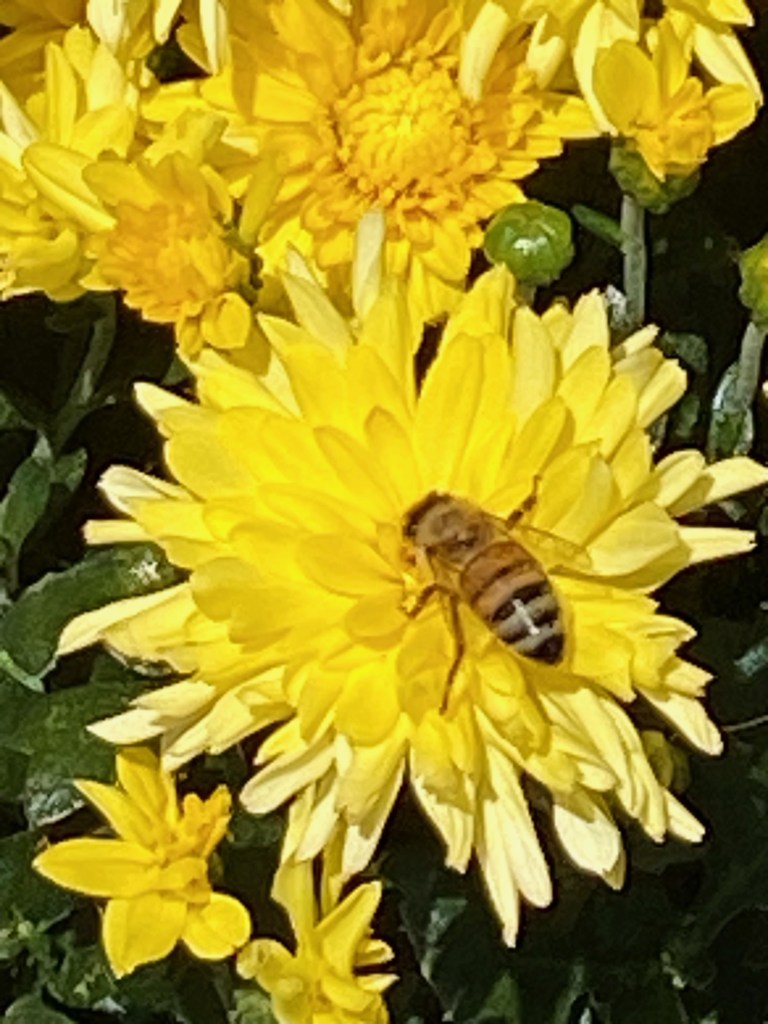
Not too often do I see a honeybee on a mum…I’d read they don’t frequent them due to spiders (who knows if that is true). I did notice this daddy long leg on my mum the other day…wonder if they eat bees?)
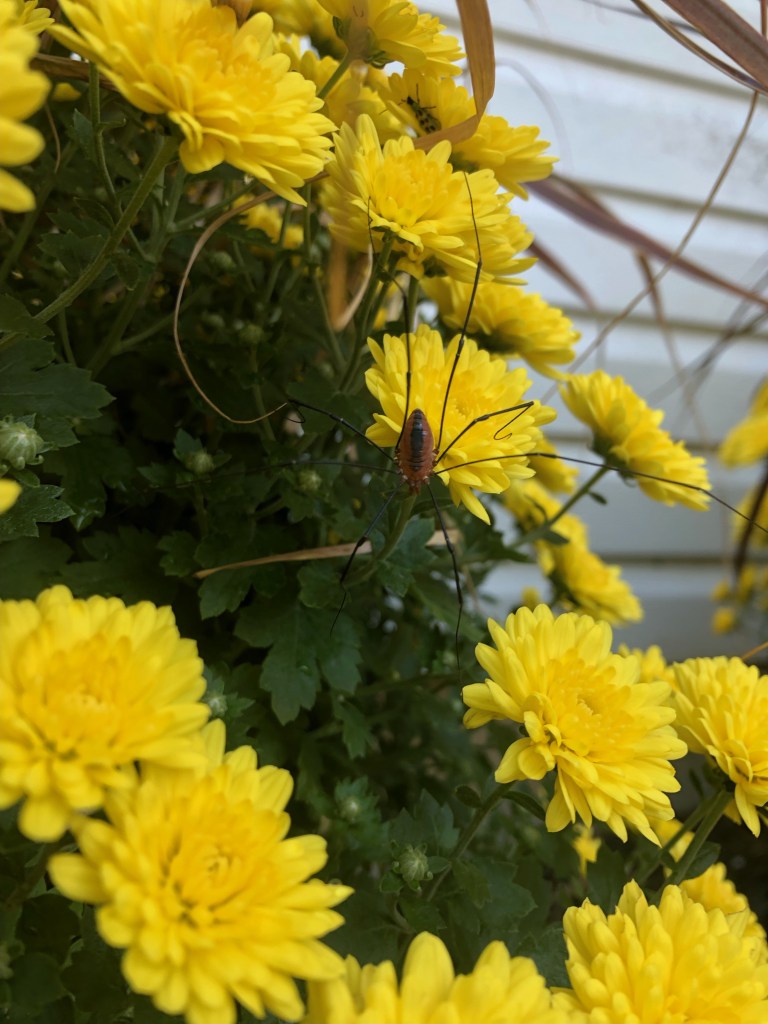
Bees do have predators like any other animal or insect. I’ll have to do some research to increase my knowledge. I DID see small hive beetles in Hive #1 yesterday, too. They are the worst for beekeepers and bees. It’s pretty cool to watch the bees aggressively attack them. A strong hive is the best defense against small hive beetles but I did add an unscented Swiffer cloth to the top of the frames.

I’ve been told other beekeepers have had success with these as traps. Anything I can do to help give the bees an edge – no need to waste time and energy fighting off beetles if a Swiffer is helpful to them. They will be using their energy this time of year to prep for winter and kill off any drones left in the hive. Drones have served their reproductive purpose for the season. The worker bees will kill them and remove them from the hive. This way they won’t eat up resources through the winter – next spring new drones will be raised as needed (at least I think that’s how it works).
I’ll continue to assess the overall health of Hive #1 as we prepare for winter. Next time I’ll have to update you on the feed vs not to feed decisions that are all part of fall management. Stay tuned and please continue to root for the bees!
-Worker Bee 2021
 Howards' Hives and Honey
The Deep Freese ended up holding meat instead.
LikeLiked by 1 person