Today the little beekeeper and I were anxious to get into hive #2 to be sure there weren’t any swarm cells. This was an inspection we did on our own without our mentor present. We, of course, want to become independent beekeepers and there are a lot of things we have become confident in through the first year of beekeeping. For example, we can light and work a smoker, we can open a hive and handle frames with ease. It’s the reading of the frames and understanding what it all means that is still tricky (and yet a very important part).
We only have hive #2 to tend as the nuc box still needs time. We successfully opened hive #2 and stumbled across what we thought we were looking for…swarm cells. We snapped some pictures, proud that we had removed what we thought we were to remove only to later find out we had removed a supersedure cell instead of a swarm cell. BIG DIFFERENCE! Talk about an awful feeling.
Here’s an explanation I found on another beekeeping site, https://www.honeybeesuite.com/is-it-a-swarm-cell-or-a-supersedure-cell/ :
Supersedure vs swarming
“Supersedure cells are often begun after the eggs are laid. The bees, knowing they need to replace the queen, begin feeding royal jelly to a young larva they have selected. They build a supersedure cell around this larva (or several larvae) and it hangs down from the face of the comb. Swarm cells, however, are built in preparation for swarming and are not intended to replace the queen, but to raise a second queen. This way, there will be a queen for the part that swarms and a queen for the part that stays.”
So…if indeed we destroyed a supersedure cell (which we know that we did as our mentor confirmed it as a supersedure cell), hive #2 may also now be queenless.
Pic of the supersedure cell I wish we still had…
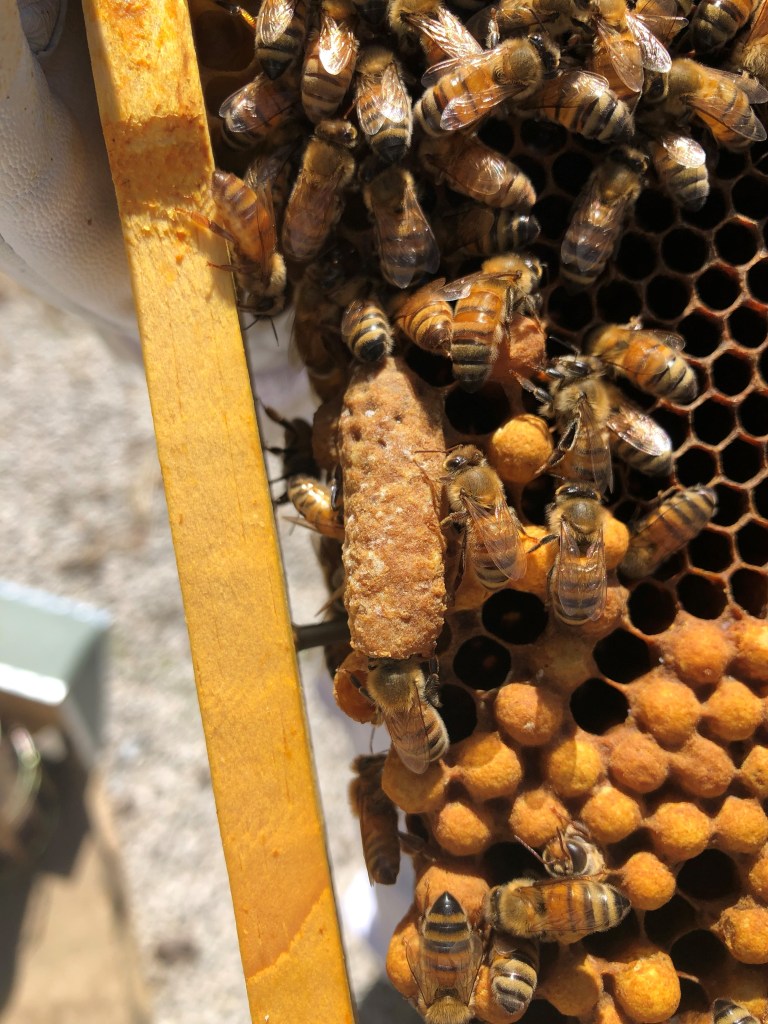
This bad feeling today is way worse than the last blog’s description of bad feeling when you are out of honey!
Sick as I am about it all, I’m trying to focus on the learning that occurred today. I definitely gained some knowledge on two very different kinds of queen cells! I’m also sad that after only a year BOTH hives have experienced queen issues – now had I stayed out of it, hive #2 may have successfully handled the issue. If nothing else I’m first hand beginning to understand the importance of a strong queen.
We are discouraged but determined to learn and grow from it all. We’ll update you on the significance of the damage next time.
For your reading enjoyment, I’ll add a second mistake made today…this one a little less painful. The smoker. Thought it was out. Set it on the kitchen table temporarily as I stepped back outside. When I came back in, it was clear that the smoker was NOT extinguished! I guess maybe I deserve that as a beekeeper? My hive got a taste of it’s own medicine.
On the bright side, a dear friend surprised our family with a porch drop today. The cutest bag with goodies in it.

The timing was perfect. It definitely lifted our spirits and made us smile despite the mishaps of the day. They say good things don’t come easy…and we sure think the honey is good so I guess we should have been better prepared for the “not easy” part!
Worker Bee 2021
 Howards' Hives and Honey
You sure are learning a lot, me too. Hope things get better.
LikeLiked by 1 person
Wow! I feel so informed, yet overwhelmed I don’t know anything still about bee keeping. It seems so complex and fragile.
You are doing an amazing job! Honey within the first year and relocating queens, so impressive:). I’m praying for easier lessons in the future, this was hard. I’m heart broken with you!!!!
LikeLiked by 1 person