Things have been going so well with the bees since we began this journey. However, this week we got a taste of reality. I was probably overly optimistic to think I could slap a super on each hive in late June with only foundation hoping it would result in drawn out comb and honey to extract. Maybe I thought “beginners luck” would be on our side? Unfortunately when I ran out to peek at the second super that had been added about a week ago it was clear to see NOTHING had been done on those frames. Nothing. Not nearly as exciting as it was to check those first super frames a week after adding a super…all drawn out and full of nectar. Maybe the nectar flow for this year is coming to a close. The bees seem to be finished drawing out comb for honey supers this season. I’m hopeful the single honey super will provide enough honey for us this year. If our hives stay strong and survive winter maybe we’ll be lucky to get two supers on each hive next year.
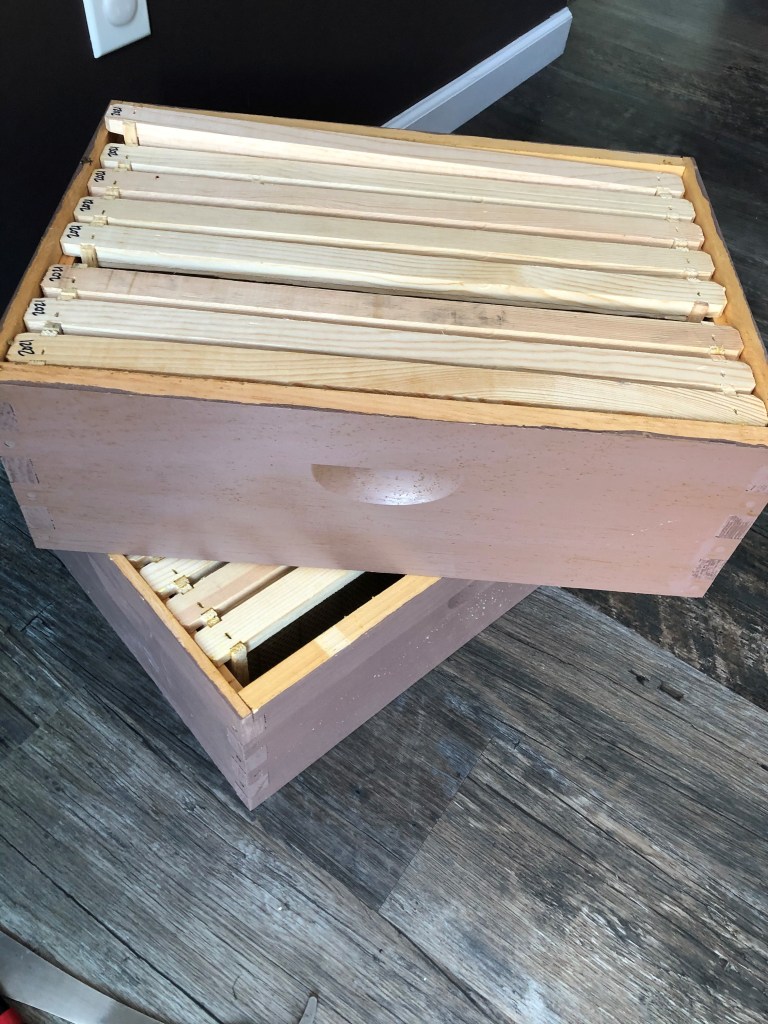
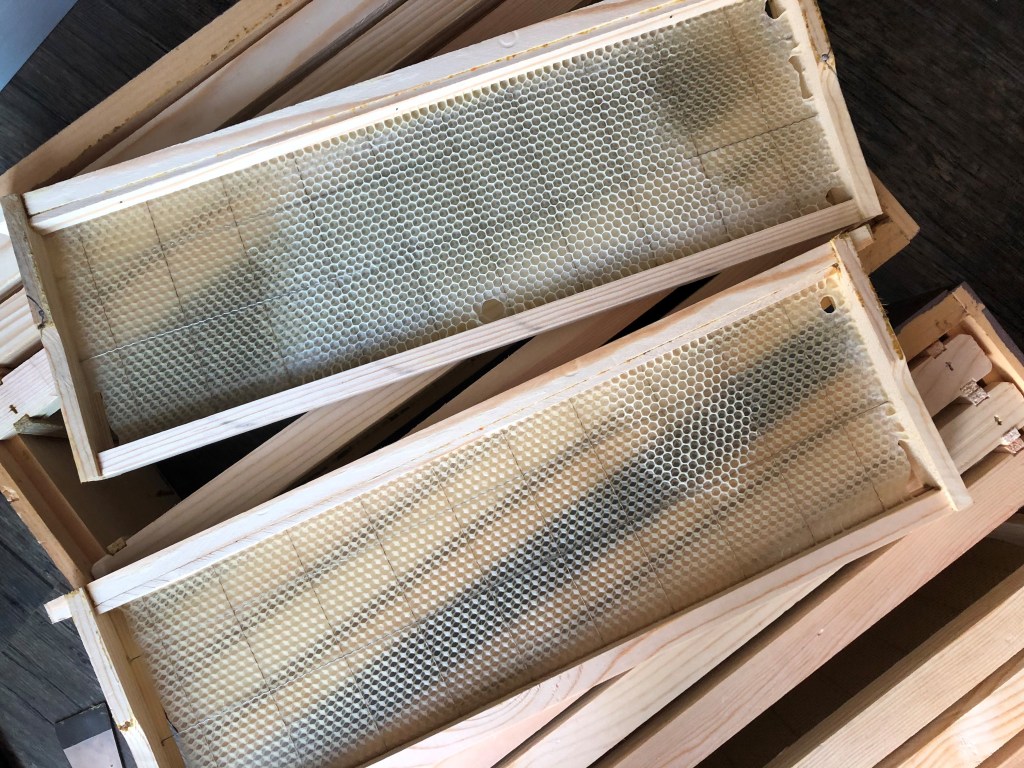
Tapping the bees out of these supers to remove them was an interesting first. I’m sure my technique needs improvement but I was proud that I was able to get the few bees that were in those supers out. My mentor advised me to invert the outer cover on the ground and tap the bees into that. I attempted to do so and for the most part feel it was successful. There were a few stray bees left that I was able to brush on their way. The most nerve-wracking part was bringing what I believed to be EMPTY honey supers back into the house. I had checked and double checked for any last lingering bees and was almost sure the supers were “all clear” before entering the house. But as I sat them down on the kitchen floor would you believe I heard and saw a buzz by. Now I’m still in a full bee suit but over there on the couch is our queen bee on her computer and the buzz is headed her way! Puzzled as to HOW I missed a bee in there it soon (but not soon enough) became evident it was just a house fly. Whew.
Now, as for that BEE BIOLOGY I’ve been putting off…let’s touch on that a bit. Here is a great diagram that I snagged from the class I took at Isabees.

This breaks down the number of days a bee spends at each stage of development. This timeline can be helpful in predicting and understanding your whole hive. I still need to spend time familiarizing myself with the bee development – I’d also like to become more confident in identifying the different stages of development on the frames.
The little beekeeper and I also attended our first in person bee meeting this week. Our mentor was the speaker at the event and he is a lot of fun to listen to. It was a small gathering of people but I hope we’ll be able to get to know these other beekeepers and learn from them as well.
-Worker Bee 2021
 Howards' Hives and Honey